

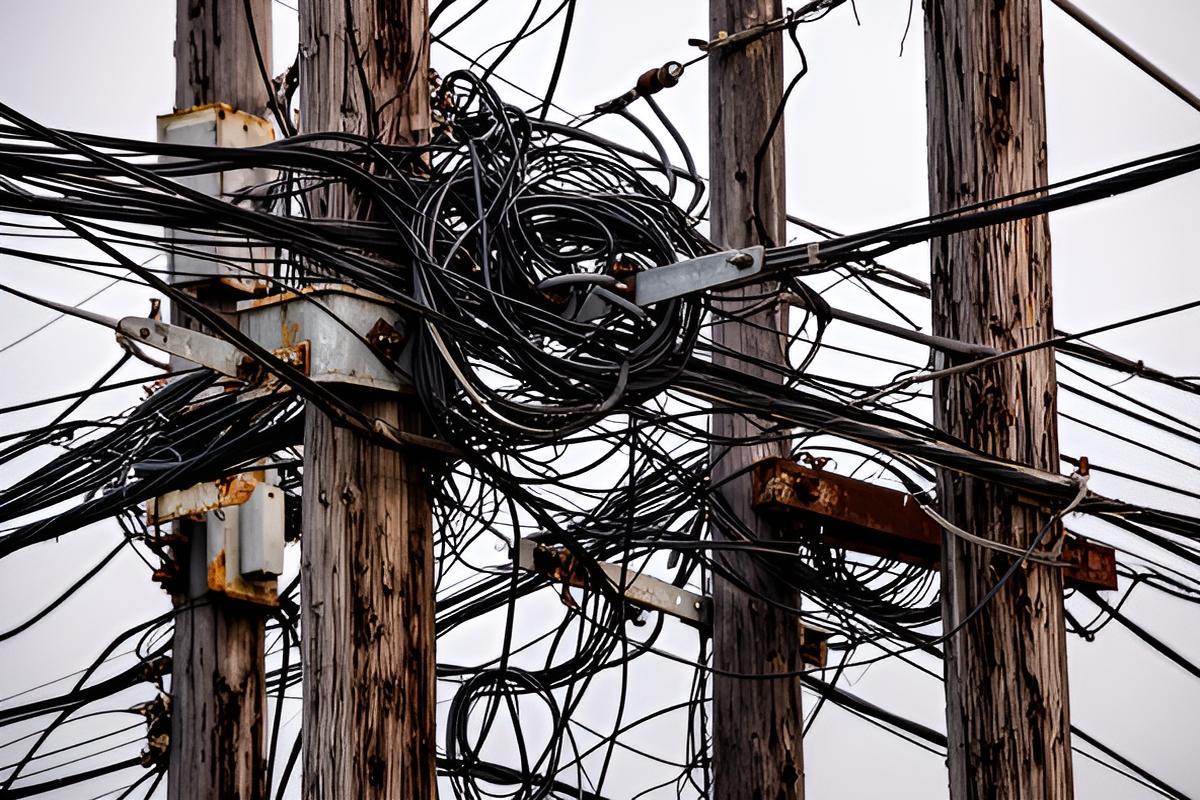
The Federal Senate approved the bill that regulates pole sharing, challenging Aneel’s directive by allowing distributors to retain commercial exploitation of the infrastructure.
The Federal Senate took a decisive step this Wednesday, November 18, by approving Bill No. 3,220/2019.
The new legislation sets guidelines for the shared use of poles by electricity distributors and telecommunications companies, a topic that has sparked intense debate in the sector for years.
The text, which now proceeds to presidential assent, significantly alters the expected regulatory landscape.
The approval comes at a time of deadlock within the Aneel (National Electricity Agency).
The agency had halted its own regulatory proposal a day earlier after a request for review.
The gap between lawmakers’ views and the regulator’s technical assessments—based on guidance from the AGU (Office of the Attorney General of the Union) for mandatory transfer of operation—creates a new dynamic for the market.
Disagreements in Management Model
The Senate rapporteur, Esperidião Amin (PP-SC), preserved the core of the text from the Chamber but reintroduced a critical point: allowing energy distributors to continue commercially exploiting the poles.
This decision directly clashes with Aneel’s proposal, championed by director Gentil Nogueira, which called for mandatory transfer of this activity to separate companies.
“The approval of the bill would require adjustments in the agencies’ regulations,”
Director Gentil Nogueira noted during the agency meeting, highlighting the regulatory clash the new law will trigger upon taking effect.
Price Cap and Timelines
Beyond management, the bill imposes a maximum limit on tariffs charged to telecommunications operators.
Until Aneel and Anatel establish a definitive methodology—potentially taking up to 30 months—the current reference value, adjusted by the IPCA, will serve as the basis.
For rural areas, the cap will be halved compared to urban rates.
The project also imposes a strict service order for irregular occupation.
Telecommunications companies will have 180 days to request regularization of uncontracted cables, or face a serious violation.
Full physical network compliance must be achieved within up to five years, aiming to mitigate risks and organize the urban landscape.
The impact of this decision is profound.
By consolidating rules through legislation, the National Congress signals a different path from what had been outlined by the technical sphere of Aneel since 2018.
The expectation now falls on the presidential sanction and, subsequently, on how the agencies will harmonize their technical standards with the new law, ensuring that infrastructure costs are not improperly passed on to end‑energy consumers.