
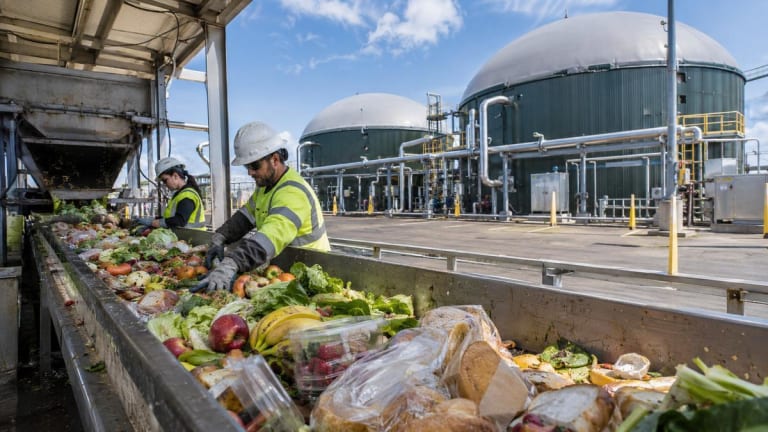
A new plant in the United States turns tons of discarded supermarket food into renewable natural gas, injecting clean fuel directly into the local grid.
Organic waste management in the retail sector receives a significant technological boost with the launch of a modern biorefinery in Lexington, North Carolina.
Developed by Divert, the industrial facility’s primary mission is to absorb surplus food that has already passed the point of sale and no longer meets sanitary criteria for human donation, turning what would be trash into clean energy.
The project was designed to meet a massive demand in the southeastern United States, linking large retail networks and logistics hubs to a circular economy system.
With a projected capacity to process about 120,000 short tons of organic material annually, the complex already injects the so‑called renewable natural gas, or RNG, directly into the pipelines that supply the region.
The Technology Behind Energy Conversion
The industrial process begins long before the material reaches the biorefinery, through smart logistics that monitor discard patterns on partner supermarket shelves.
Networks such as Harris Teeter, along with selected Publix units and distributor UNFI, form the support and supply base for the technological infrastructure.
When the organic material arrives at the plant, it undergoes rigorous sorting and mechanical preparation before entering anaerobic digestion tanks.
In this oxygen‑free environment, specialized microorganisms break down the biomass, producing raw biogas that is then purified to meet the strict quality standards required by local utility companies.
Converting food waste into clean fuel represents a structural shift in how retail handles inevitable losses, combining operational efficiency with energy sustainability.
Expansion and Sustainability Goals
While the primary focus of retail networks remains on loss prevention and the donation of their own food for consumption, the new industrial unit addresses the liabilities of items that inevitably lead to traditional utilization.
The ambitious goal of Divert is to reach more than 2,500 stores and 20 distribution centers connected by the end of 2026.
In addition to directly generating RNG for the piped gas network, the operational model implemented in Lexington also includes water recovery for internal use in manufacturing processes and the production of organic fertilizers.
The initiative reinforces the environmental commitment to transform environmental liabilities into useful resources for agriculture and the regional energy mix.
The consolidation of this industrial model in the United States sets important precedents for the global debate on food waste.
With the continuous expansion of biogas infrastructure, the supermarket sector demonstrates that it is possible to mitigate severe environmental impacts while providing viable energy alternatives for local communities.