

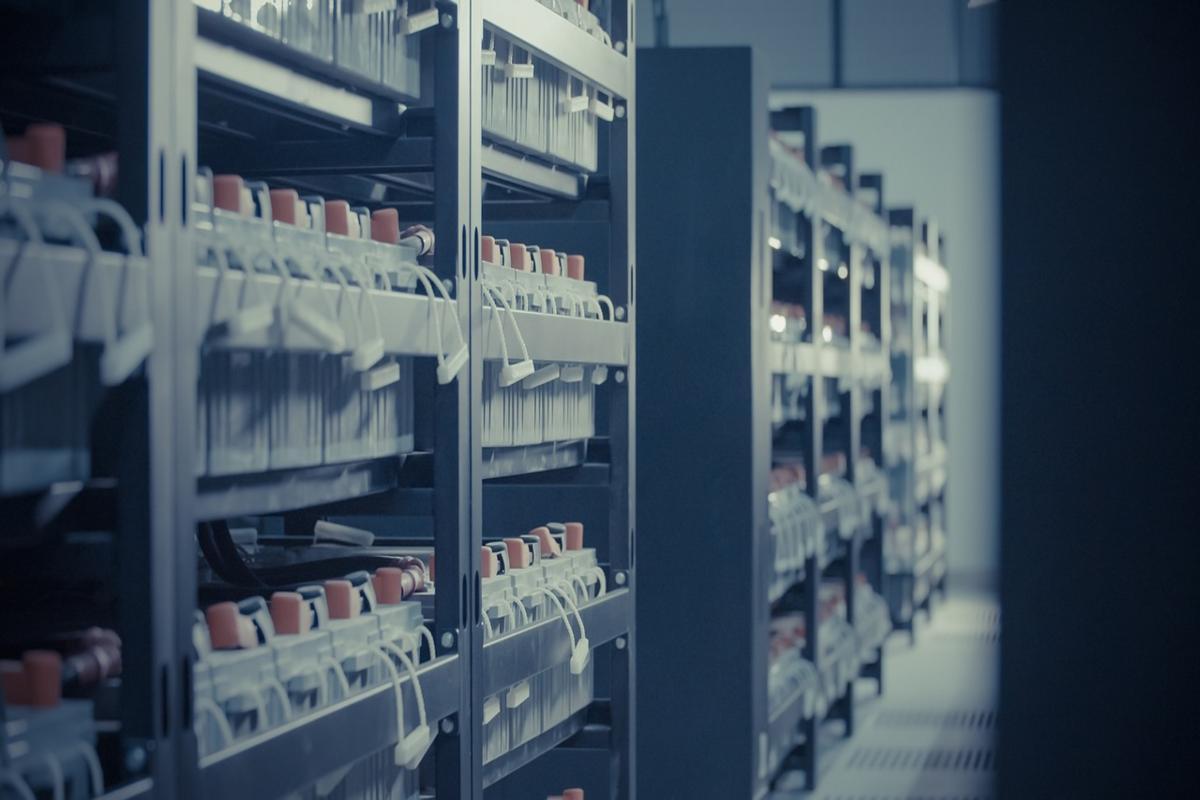
The Abeeólica has turned to the courts to halt capacity‑reserve auctions aimed at battery storage, citing constitutional flaws and serious cost‑allocation asymmetries.
The Brazilian Association of Wind Energy and New Technologies (Abeeólica) filed a public civil action in the 17th Federal Civil Court of the Federal District, directly targeting the Union and Aneel. The primary goal of the suit is to suspend the capacity‑reserve auctions for acquiring battery energy‑storage systems, scheduled for early December. The organization argues that the current model unfairly and exclusively shifts the financial burden onto generators, violating the traditional logic of the National Interconnected System (SIN).
The main point of contention lies in the recent legislative change that mandates that the cost of these technologies falls solely on energy producers. For Abeeólica, this directive violates fundamental constitutional principles such as equality, free competition, and legal certainty, and ignores that storage infrastructure delivers systemic benefits to society and the end consumer, not just to the generating park.
Regulatory Uncertainty and Lack of Methodology
Beyond the legal challenge, the entity highlights the absence of established guidelines from the regulatory agency on how the charge will be divided among stakeholders. Although a public consultation was held on the topic, the regulation remains inconclusive, leaving entrepreneurs in the dark about the real financial impacts of contracts that will span fifteen years, with supply slated to begin in August 2028.
The rules under discussion in the regulatory sphere provide different participation factors based on the flexibility of the generating source, which could lead to severe competitive imbalances.
Uncertainty undermines business predictability and prevents investors from accurately assessing the risks of wind and solar projects already structured under previous assumptions.
Legislative Paths and Next Steps
While the legal impasse unfolds in the Federal Court, the debate also reverberates in the National Congress. Lawmakers are advancing legislative proposals that aim to align the battery procurement model with the historical standard of the electric sector, shifting the burden to the tariff paid by end‑users. Several representative bodies of the renewable sectors have already expressed support for this re‑discussion.
The Abeeólica emphasizes that the intent of the judicial measure is not to block the modernization of the energy mix or the use of new storage technologies, but to ensure that auctions take place only after legal and regulatory distortions are corrected. If auctions are kept in their current form without proper legal certainty, the sector foresees a scenario of prolonged litigation and potential losses in attracting investment for Brazil’s energy transition.