
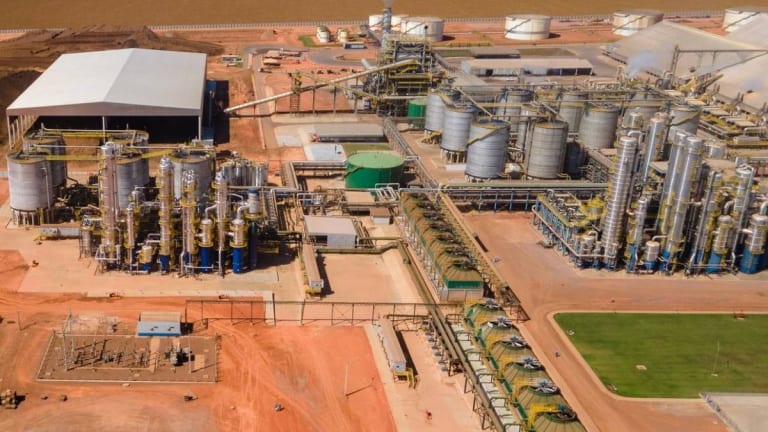
Inpasa plans to invest R$ 22 billion in the Pascal Project, a 2,100‑kilometer pipeline network to integrate fuel distribution between the Central-West and Southeast regions.
The country’s largest corn‑ethanol producer has begun the process to realize one of Brazil’s largest logistics infrastructure projects. The Pascal Project includes the construction of two parallel pipelines that will connect Sinop (MT) to Paulínia (SP), revolutionizing the flow of biofuels and the receipt of petroleum derivatives.
With a projected investment of R$ 22 billion, the initiative was structured by IPA Participações Ltda. and presented to Ibama for environmental licensing. The expectation is that the works will span five years, creating thousands of jobs and redefining the national transportation matrix.
The scale of the proposal reflects the accelerated expansion of agribusiness and biofuel industries in the Central-West, demanding more efficient and sustainable alternatives to traditional road transport.
Bidirectional operation and logistical impact
The 2,100‑kilometer structure will cross dozens of municipalities in the states of Mato Grosso, Mato Grosso do Sul and São Paulo. The export pipeline will have the capacity to move up to 13.3 billion liters of ethanol per year toward the main distribution hub in São Paulo.
In the opposite direction, the second pipeline will transport about 6.6 million cubic meters of petroleum derivatives annually. Thus, the same easement corridor will serve the interior of the country and the shipment of clean fuel to major centers and for export.
The project foresees the creation of up to 8,000 jobs at the construction peak. Once the pipelines are operational, the expectation is to generate up to 407 permanent jobs for maintenance and system management.
Emission reduction and highway relief
Replacing road transport with pipelines is expected to remove roughly 225,000 truck trips from the roads each year. This equates to taking more than 5,400 heavy vehicles off long‑haul routes.
From a sustainability perspective, the pipeline option significantly reduces the carbon footprint. Estimates suggest that the operation could prevent the emission of 500,000 tons of carbon dioxide into the atmosphere each year.
Industry experts state:
Pipeline transport can emit up to 80 times less carbon per ton-kilometer compared to traditional road transport.
Environmental licensing and route challenges
The current project reuses already established sections, such as the easement strip of the Gasoduto Bolívia-Brasil (Gasbol). This strategy minimizes the need to clear native vegetation and reduces environmental impacts along the route.
At present, the assessment process at Ibama is in the preliminary phase, preceding the development of detailed environmental studies, known as EIA/Rima, for the final route definition.
The environmental agency recommended that the study include analyses of alternative routes to ensure the least possible intervention in protected areas, wetlands, and urbanized sections.
Next steps and market context
The progress of the Projeto Pascal comes at a time when corn‑ethanol production already accounts for nearly half of all biofuels produced in the country. The consolidation of pipelines will bring greater supply stability and mitigate sharp fluctuations in freight costs.
Still dependent on regulatory and environmental approvals, the plan represents a strategic milestone for Inpasa and for fuel logistics in Brazil, setting new standards for the integration between agribusiness and energy distribution.