
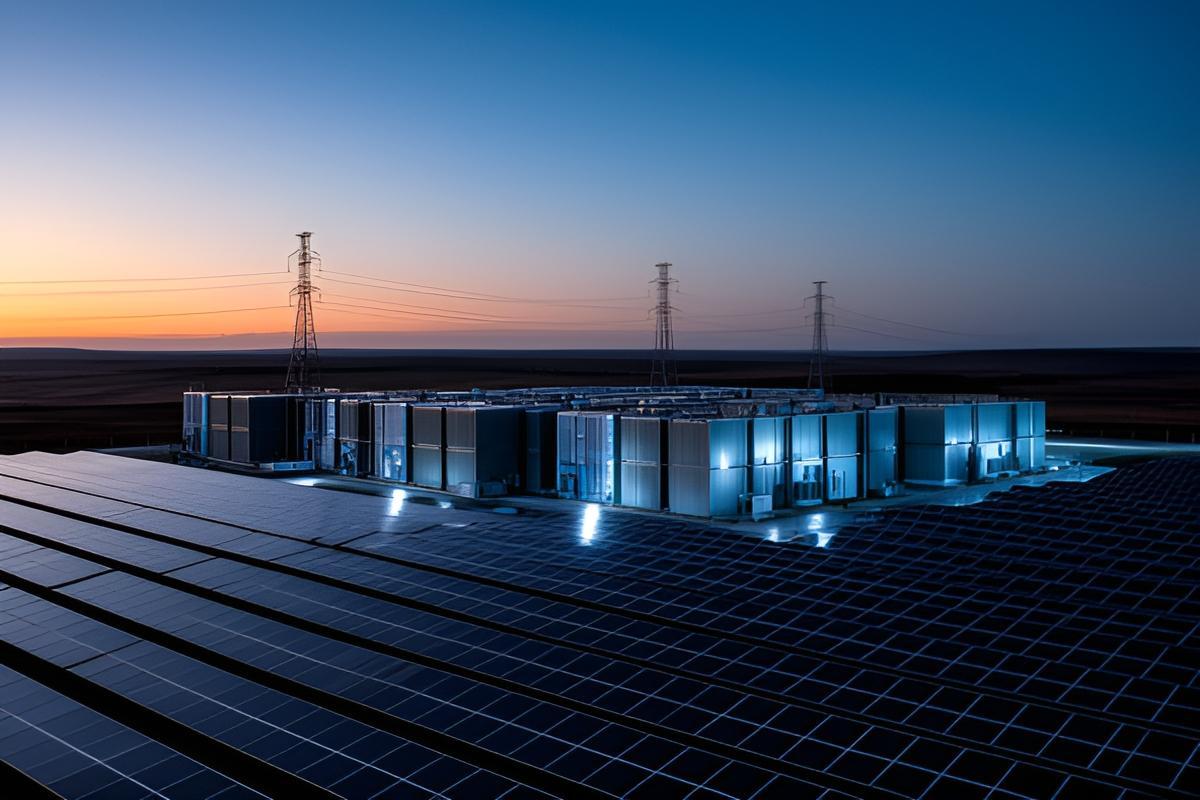
Projections indicate that Brazil’s daily power variation will exceed 50 GW by 2030, heightening the urgency for energy storage solutions and reversible power plants.
The Brazilian electric system is undergoing a profound transformation in its daily operational dynamics. By the end of this decade, the daily fluctuation in electricity demand is expected to surpass an unprecedented 50 GW.
This pronounced oscillation demands urgent measures to expand the response capacity and flexibility of the national grid. The rapid transition presents new technical challenges for operators of the distribution and transmission networks.
The scenario was presented by Marisete Pereira, president of Abrage (Brazilian Association of Electric Power Generating Companies), during Coniben 2026 held in Lisbon. The event brought together experts to discuss the direction of the energy transition.
The impact of solar growth on operations
The need for rapid system adaptation rose to 45 GW in 2025 and reached 49 GW in 2026. This shift stems directly from the accelerated growth of wind and solar portfolios, especially micro and mini distributed generation.
During daylight hours, solar production sharply reduces the demand on large conventional plants. However, the late afternoon requires an immediate increase in other generation sources to compensate for the sun’s departure.
This mismatch between abundant daytime supply and the evening consumption peak reinforces the search for efficient electricity storage technologies.
Complementary storage solutions
To mitigate operational risks, Abrage highlights that Brazil has an additional potential of 84 GW in hydroelectric capacity. The volume involves modernizing existing plants, motorizing idle wells, and building new reversible plants.
Meanwhile, the electrochemical battery storage sector already accounts for about 1 GWh installed in the country. The technology has been growing rapidly, especially in commercial and industrial applications.
According to Markus Vlasits, president of Absae (Brazilian Association of Energy Storage Solutions), the two modalities should work together to ensure market supply.
“While reversible plants offer advantages for large‑scale long‑duration storage, batteries provide modularity and millisecond response times.”
Regulatory Enhancement and New Auctions
Following the first capacity‑reserve auctions focused on storage, industry stakeholders are calling for the creation of a continuous procurement calendar. Predictability is seen as a central pillar for attracting new investment to the country.
In addition, sector leaders are demanding that distributed energy resources receive priority in the 2027 regulatory agenda. The goal is to unlock the use of batteries installed directly at end‑user sites.
Defining clear rules for price formation and creating economic incentives are considered indispensable steps to enhance the flexibility of the national electric system.
Outlook for the Brazilian Energy Mix
The balance between the advancement of variable renewable sources and the stability of the electric grid will depend on the speed of the regulatory environment. The country must structure efficient mechanisms to turn identified potential into operational projects.
Integrating battery systems with hydropower infrastructure will ensure that Brazil meets the growing daily load ramp, preserving the safety and sustainability of its energy mix in the coming years.