
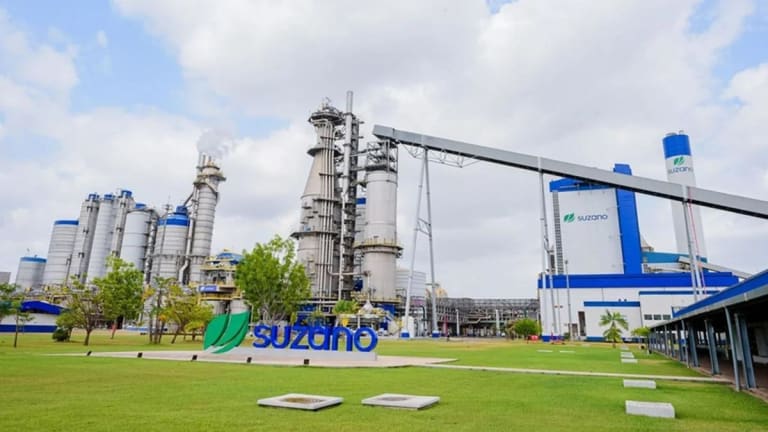
The BNDES will inject R$ 97.9 million into 47 research and development projects at Suzano, boosting technological innovation and sustainability in Brazil’s cellulose sector.
The Brazilian plantation sector, responsible for about 1% of the national GDP and for creating 2.8 million jobs, has just received a significant financial boost. The National Bank for Economic and Social Development (BNDES) announced a contribution of R$ 97.9 million aimed at strengthening the productive and innovative capacity of Suzano, the world’s leading exporter of cellulose.
This measure is intended to secure Brazil’s leadership in the international market by supporting 47 research and development (R&D) initiatives. With a focus on areas such as genetics, forest management, and new products like fluff cellulose, the goal is to raise industry efficiency amid intense global competition and commodity price volatility.
Investment in technological competitiveness
The financing aligns with BNDES’s strategy to encourage the private sector in projects that combine technology and sustainability. Since 2023, the bank has already allocated more than R$ 40 billion to foster innovation across various industrial sectors.
Aloizio Mercadante, president of BNDES, stated:
“In the international market, cellulose is a commodity. That means its prices are set by the fluctuation of demand and supply. It also implies strong product standardization, which limits differentiation power and reinforces cost‑based competition.”
For Suzano, the funding is a catalyst to accelerate long‑term goals. According to Marcos Assumpção, the company’s executive vice president, the financial support is essential to consolidate a technology agenda that blends science and operational efficiency.
Focus on sustainability and academic partnerships
The research fronts cover everything from developing sustainable packaging designed to replace plastic to advances in forest improvement and management resilience. In total, there are 18 product innovation projects, 13 management projects, 10 genetics projects, and 6 focused on absorbent items.
The execution of these projects will involve collaboration with leading educational institutions in the country. Universities such as USP, Unesp, UFV, UFRRJ, and UFES will be integrated with the company’s industrial units located in Mato Grosso do Sul, São Paulo, Espírito Santo, Bahia, and Maranhão.
Strengthening the bioeconomy through this partnership between industry and science positions Brazil strategically. With the country established as the world’s largest cellulose exporter, these investments ensure that national production remains competitive in demanding markets such as China, Europe, and North America, paving the way for a more innovative industrial model that is less dependent on traditional methods.