

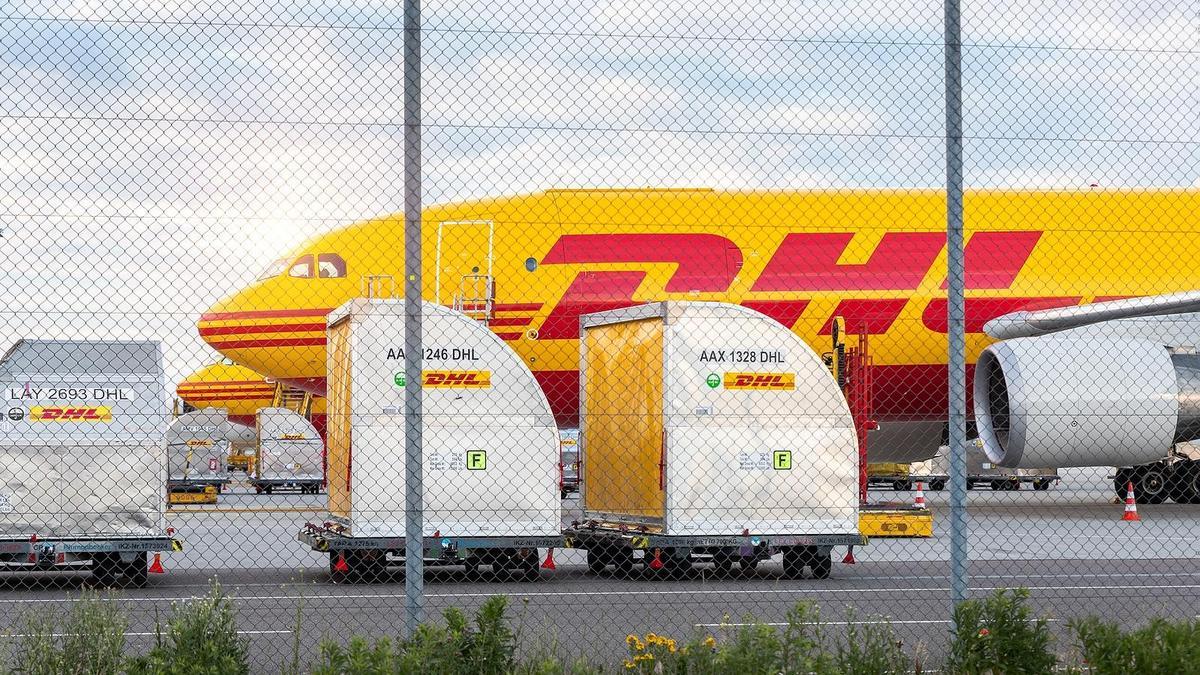
DHL Express has signed an agreement with TotalEnergies to supply its aircraft with 5 million liters of sustainable fuel at Paris‑Charles de Gaulle Airport.
DHL Express has formalized a strategic partnership with TotalEnergies to advance sustainability in its logistics operations across Europe. The renewable one‑year contract calls for an initial supply of 5 million liters of sustainable aviation fuel (SAF).
With the deal, the express transport company becomes the first in the rapid freight sector to adopt renewable fuel at Paris‑Charles de Gaulle Airport. The inaugural flight powered by the eco‑fuel took off on November 9, 2026.
The initiative integrates clean fuel into the routes of the express delivery network. Aircraft refueled at the French hub connect the capital to four major company centers: Leipzig, Casablanca, Milan, and London.
Emission reduction and focus on decarbonisation
DHL Express estimates an annual reduction of about 11,800 tonnes of CO₂ equivalent in its French operations. Depending on the feedstock, SAF can cut greenhouse gas emissions by up to 80% over its life cycle compared to fossil kerosene.
The fuel production uses waste from the circular economy, such as used cooking oil. The project reinforces DHL’s global goal of reaching 30% SAF in its aircraft fleet by 2030.
Executive Travis Cobb, Vice President of Global Network Operations and Aviation at DHL Express, noted that in 2025 SAF accounted for 10% of the fleet’s fuel consumption. DHL’s president in France, Philippe Prétat, celebrated the convergence of efficiency and sustainability.
Philippe Prétat said:
“Logistical performance and a lower carbon footprint can and should go hand in hand in operations.”
For TotalEnergies, New Mobility Director Mathieu Soulas stated that clean fuel is the most immediate and effective tool to reduce aviation’s environmental impact.
Paris Hub Structure and Global Expansion
The rollout of SAF coincides with the fifth anniversary of the DHL hub at Paris‑Charles de Gaulle. Launched in 2021 with a €170 million investment, the facility represents the company’s largest investment in France since 1976.
The complex covers 91,000 square meters and can process up to 38,000 parcels per hour. It operates 24 hours a day with a team of 760 employees dedicated to European operations.
DHL Express also maintains other major sustainability agreements, such as a five‑year partnership with IAG Cargo at Heathrow airport, aimed at reducing 640,000 tonnes of CO₂ by 2030.
The financial challenge remains high, as SAF costs three to four times more than conventional jet fuel. However, European legislation such as ReFuelEU Aviation requires a gradual increase in sustainable blends at EU airports.
Industrial Investments and Ground Logistics
To meet market demand, TotalEnergies invested €500 million to convert the Grandpuits complex, which will have a capacity of 230,000 tonnes of SAF by 2026. The company also invested €340 million in the La Mède unit.
The oil major’s goal is to produce 1.5 million tonnes of SAF annually by 2030, while securing long‑term agreements with groups such as Air France‑KLM.
On French soil, DHL Express already operates with 100% of its own electric light commercial fleet. The company serves 55 urban centers across the country using clean modes such as bicycles, cargo tricycles, and foot deliveries.
The new partnership at Paris‑Charles de Gaulle strengthens the energy transition for the cargo aviation sector. Even amid high input costs, regulatory demands and corporate commitments are expected to accelerate the adoption of renewable fuels by 2030.