
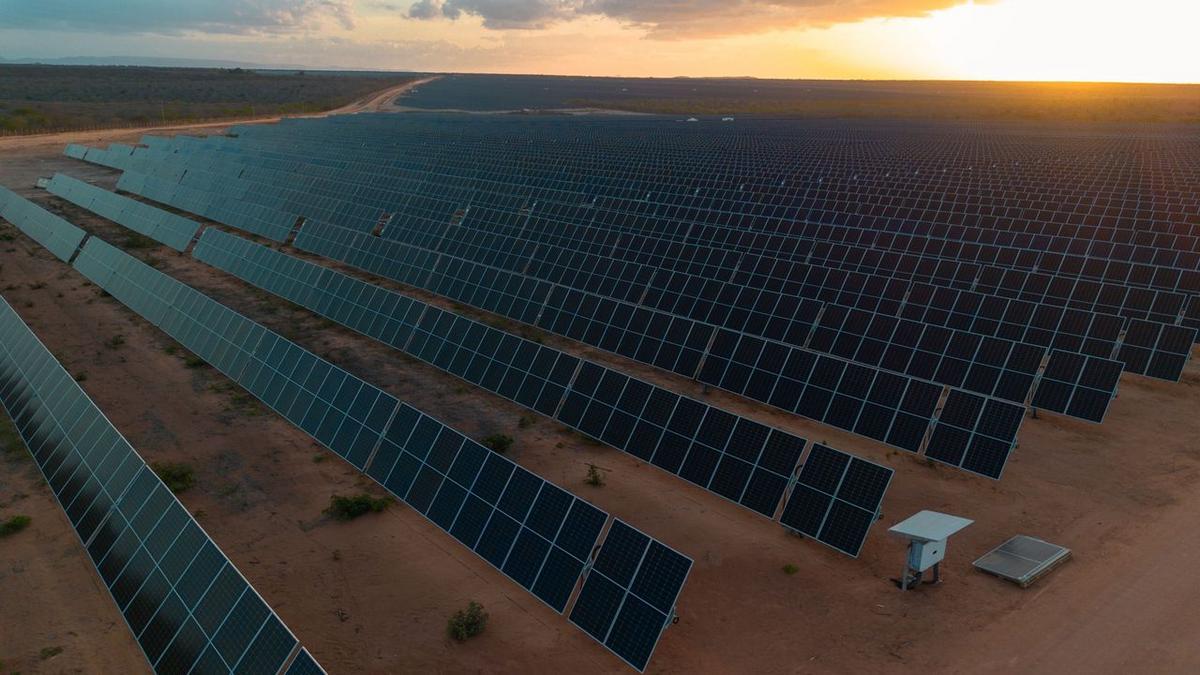
A new ANEEL methodology for allocating power cuts could raise the share of losses attributed to solar plants in Brazil’s Northeast by 73% by 2028.
The national electric sector is on the brink of a significant change that promises to alter the financial landscape for renewable energy generators. A simulation conducted by Aurora Energy Research shows that the recent resolution approved by the National Electricity Agency (ANEEL) will redistribute the burden of operational losses, known as curtailment, penalizing solar energy more heavily in the coming years.
When applying the new guidelines from Regulatory Resolution No. 1,170/2026 on 2025 operational data, analysts found that the share of cuts attributed to photovoltaic plants will jump from 15.7% to 27.1%. Practically, this represents an increase of 4 terawatt-hours (TWh) in losses recorded for the source, raising the total volume from 7 to 11 TWh.
The dynamics of power cuts and the new rules
The curtailment phenomenon occurs when the National System Operator (ONS) requests a reduction in generation due to transmission network constraints or to ensure system stability when supply exceeds demand. While the physical cut occurs at specific points for greater effectiveness, ANEEL’s new rule—born of seven years of debate—establishes a sharing system that dilutes the effects among various entrepreneurs.
The measure, which aims to organize the operational order of reductions, introduces a new criterion that balances responsibility for losses across different energy sources. However, the immediate impact is a shift in load, with hydropower and other sources now sharing this burden, and solar generation in the Northeast absorbing a proportionally larger share of the restriction.
“The simulation points to a significant transfer of the share currently associated with hydropower generation to solar and wind sources, which could alter the commercial outcomes of photovoltaic projects in the long term.”
Commercial Impact and Transition Through 2028
The inclusion of the hydroelectric component, specifically the turbine‑eligible water‑flow energy, will occur in a phased manner, with participation added in 25% increments until reaching 100% in 2028. This schedule was designed by ANEEL to avoid sudden market shocks, allowing stakeholders to gradually adapt to the new calculations.
Over the next 18 months, a transition and “shadow period” will enable the ONS and the Electric Power Commercialization Chamber (CCEE) to conduct continuous simulations. The goal is to provide transparency to investors, allowing owners of solar complexes to understand the volume of energy that will be counted as restricted, regardless of where the physical cut occurred.
For investors and operators, the scenario demands a new risk‑management strategy. The change in accounting methodology makes network monitoring essential, as project profitability will now depend not only on the generation efficiency of the plants but also on the impact of a national loss‑sharing allocation that, under the new rules, tends to increase negative figures for northeastern solar parks.