
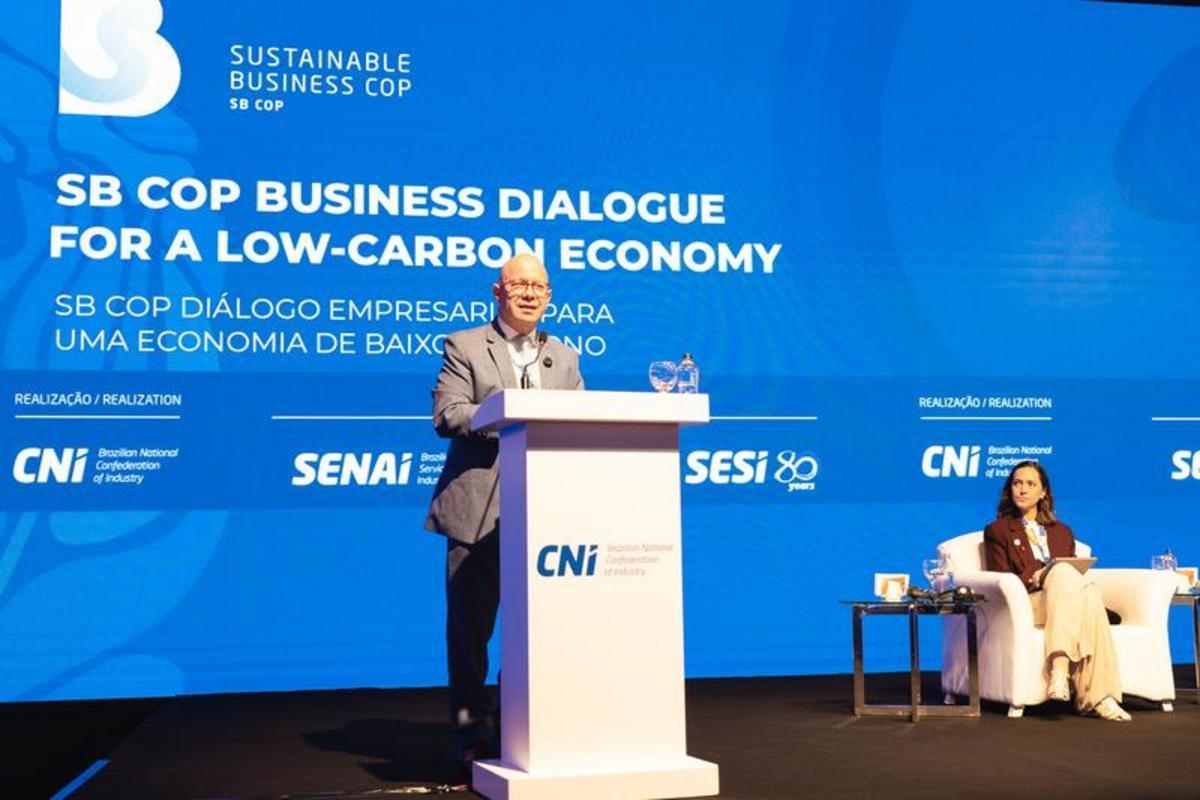
The role of ABDI at COP31 highlighted the strategic importance of public procurement and the green economy in driving the energy transition and industrial sustainability in Brazil, blending innovation with environmental commitment.
Brazil’s participation in global forums gains momentum with discussions focused on modernizing the productive sector. The Brazilian Industrial Development Agency (ABDI) led an intensive agenda at COP31, held in Antalya, Turkey. In the Brazil Pavilion, located in the Blue Zone, key discussions linked traceability of materials, circularity, and the future of work amid the new demands of the energy transition.
The event underscored how sustainability has moved beyond a mere image enhancer to become an essential competitive pillar. Experts and public officials debated pathways to establish a clean industry capable of combining technological development, social responsibility, and environmental stewardship throughout its supply chain.
The Power of Public Procurement in the Green Economy
Moderated by Talita Daher, Manager of New Economy and Green Industry at ABDI, the panel “Traceability and Circularity: The Power of Public Procurement to Create Markets for Sustainable Materials” highlighted the economic impact of the state. Government purchases account for about 16% of Brazil’s GDP, serving as a lever for new business models focused on clean energy and resource reuse.
This means the state has far more than a budget to acquire goods and services. It has a powerful tool to create markets, stimulate investment, drive innovation, and strengthen the national industry.
During the debate, the need for verification was emphasized as an uncompromising requirement. The Recircula Brasil platform, developed by ABDI, uses electronic invoicing to generate evidence of circularity, ensuring the origin and destination of recycled materials. For Vinícius Saraceni, Director-General of the Circular Movement, this initiative places the country in an international leadership position in resource management.
Innovation and the Future of Sustainable Work
The program at the Brazil Pavilion also opened space for the panel “Work in Transformation: Skills for a green economy, digital and competitive,” moderated by the president of ABDI, Olavo Noleto. The focus was on preparing the workforce for the impacts of automation and artificial intelligence in the clean industry.
We need to work across the entire production chain to qualify jobs, prepare people for the new challenges of the world of work, such as automation, artificial intelligence, and the resizing of roles.
Initiatives such as the Emprega + Green Industry platform, presented by Gabriel Damasco do Vale (representing the MDIC), aim to map demands for technological training. At the same time, the Acredita Program, detailed by Maíra Magalhães (MDS), reinforced the social inclusion of beneficiaries of income transfer programs in the formal labor market, ensuring that progress toward sustainability is accompanied by social justice.
Business Dialogues and the Power of the Energy Matrix
The participation of ABDI extended to the SB COP Business Dialogues event, promoted by CNI. On the occasion, Olavo Noleto highlighted the importance of combining data intelligence—through the Industry Observatory—with decarbonization goals.
The president of CNI, Ricardo Alban, reinforced the national competitive potential by reminding that the country has one of the cleanest energy matrices in the world, emphasizing the progress of biofuels and low‑carbon hydrogen.
The mobilization at COP31 consolidates Brazil’s commitment to leading the global agenda on clean energy and the green economy. By integrating technological innovation, smart public procurement regulation, and professional qualification, the country paves the way for a modern, competitive industrial model deeply committed to future climate goals.