
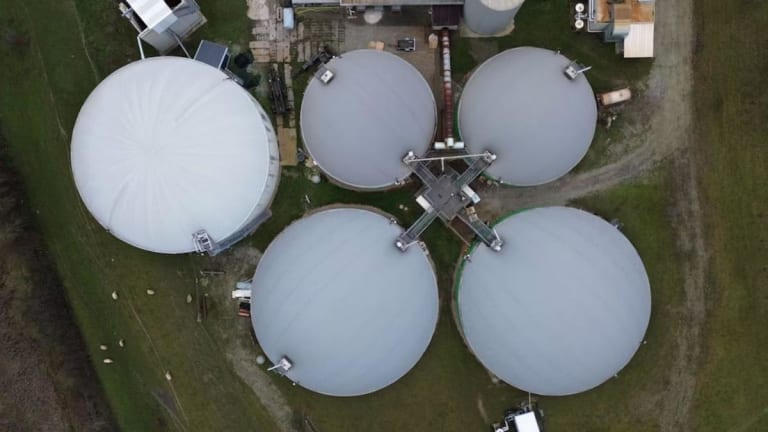
Canadian Anaergia secured a C$34 million contract to build a plant in Hungary that will convert agricultural waste into biogas for injection into the natural gas grid by 2028.
The energy transition in Europe has just gained a new significant chapter.
The Canadian company Anaergia confirmed on Monday (9) an investment of about 34 million Canadian dollars (C$) for the construction of a high‑technology facility focused on processing agricultural waste in Hungary.
The project aims to turn tonnes of organic matter into renewable fuel, strengthening the country’s gas infrastructure.
With a capacity to process more than 140 000 tonnes of waste per year, the new unit is a strategic piece on Hungary’s decarbonization board.
The plant is expected to produce 900 normal cubic metres per hour (Nm³/h) of biogas, which, after purification, will be converted into biomethane and fed into the national distribution network.
Cutting‑edge technology for sustainability
The heart of the project lies in the anaerobic digestion technology Triton, developed by Anaergia itself.
The system operates in controlled environments where microorganisms break down organic load without oxygen.
To optimise flow, the installation will also feature the FeedREX system, responsible for pre‑treatment and preparation of waste before digestion.
The sectoral analysis on the impact of organic conversion technology highlights:
“Utilising agricultural waste represents a robust alternative for producing renewable fuel, reducing dependence on fossil gas extraction and promoting circular economy in the energy sector.”
Expansion and European context
This is Anaergia’s second major contract in Hungary in less than two months.
In September, the company had already announced a C$36 million investment for a plant focused on electricity generation.
Combined, the projects represent a total investment of C$70 million, marking a significant return of the multinational to the Hungarian market after a decade of absence from large infrastructure projects.
The company’s movement is perfectly aligned with the REPowerEU plan of the European Commission, which aims to raise renewable gas production to 35 billion cubic meters annually by 2030.
Although the target is ambitious, building new waste processing units is seen as the essential path to mitigate energy scarcity risks on the continent.
The engineering schedule is already underway, with the plant expected to be fully operational and undergoing functional tests by mid-2028.
The success of this venture not only diversifies Hungary’s energy mix but also serves as a viability model for using existing natural gas infrastructure adapted to receive fuels from organic and renewable sources.