
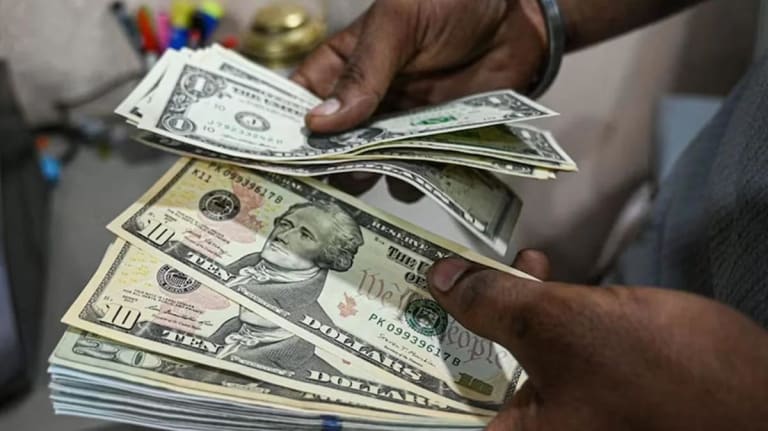
The dollar finished the week on the rise, surpassing R$ 5.50, driven by positive U.S. employment data and fiscal uncertainties in Brazil’s domestic scene.
The financial market saw strong volatility at the week’s close. The dollar accelerated its upward trajectory in the national market, mirroring the appreciation trend seen abroad.
The U.S. currency closed the trading session at R$ 5.5087, up 0.37% in the spot market. With this result, the exchange rate has accumulated a weekly gain of 1.18%, reaching its highest closing level in recent times.
This movement reflects a blend of robust external factors and local investors’ caution amid the country’s fiscal outlook.
External pressure and equity market
Although it began the day testing a brief pullback in search of adjustment, the currency shifted direction after the release of the U.S. employment report, the payroll.
The numbers came in above expectations from financial projections, strengthening the dollar globally. The DXY index, which measures the dollar’s strength against a basket of global currencies, rose 0.76%, reaching 102.3100 points.
At the same time, the B3 ended Friday with a negative bias. Performance was pressured by a profit‑realization move and the defensive stance of large institutional investors.
Reassessment in the banking sector
Anxiety over the macroeconomic backdrop prompted Banco Safra to make significant revisions to its analyses of Brazil’s major financial institutions.
Analysts Daniel Vaz and Rafael Nobre downgraded their recommendation for Banco do Brasil from neutral to sell. The institution also lowered the target price for the stock to R$ 19.
Other sector giants also saw their estimates cut. Recommendations for Bradesco and Itaú were adjusted to neutral, reflecting more conservative projections for the coming years.
Government Position and Fiscal Outlook
Amid a cautious market climate, President Lula da Silva defended his administration’s economic management during a meeting of the CNPE. The head of the executive emphasized a commitment to fiscal balance while not neglecting social priorities.
During the event, the president questioned the metrics used by financial analysts to measure public debt and highlighted the pursuit of greater national economic autonomy.
President Lula da Silva stated:
“If we truly analyze our debt, it isn’t all that it appears to be… what is labeled as Brazilian public debt is not.”
Perspectives and Next Steps
The alignment between heated U.S. indicators and fiscal doubts in the domestic environment keeps local assets under pressure.
In upcoming sessions, financial actors should continue monitoring the government’s budgetary developments and new global macroeconomic data to chart the market’s direction.