
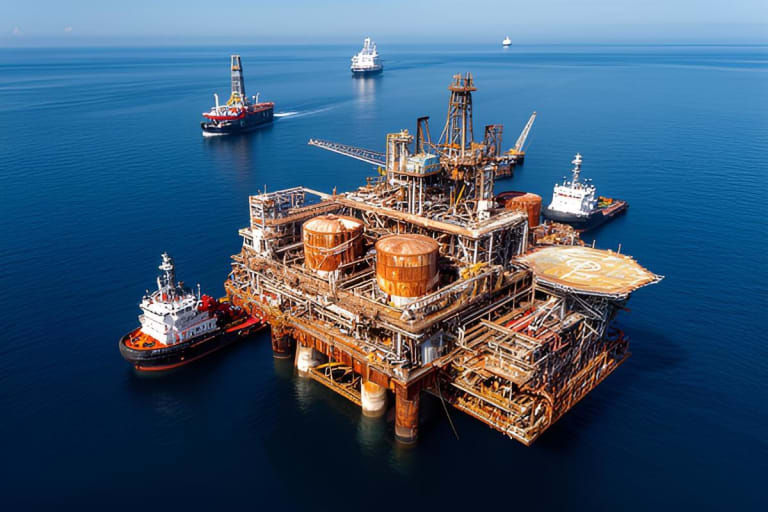
The CNPE approved guidelines for the energy transition without imposing vetoes on oil, while the government paves the way to auction 52 new exploratory blocks in the country.
The National Energy Policy Council (CNPE) approved a set of guidelines that will steer the gradual reduction of Brazil’s dependence on fossil fuels. The decision was made during a meeting led by President Luiz Inácio Lula da Silva.
The new strategic alignment avoided the inclusion of rigid targets or limits on oil extraction in the country. This guidance ensures space for hydrocarbons to continue playing a central role in the economy and national energy security.
At the same time, the federal government cleared environmental procedures to enable the auction of 52 new exploratory blocks. The measure demonstrates a pursuit of balance between climate goals and the strengthening of the traditional productive sector.
Balancing exploration and energy goals
The current guidelines treat the transition as a gradual process focused on economic development. The approved text takes into account the preservation of public revenues, competitiveness, and the impact on consumer prices.
Proposals from the environmental wing that suggested suspending new exploration frontiers were not incorporated. The priority was maintaining supply rules and ensuring continuous supply for the domestic market.
Studies from the Decennial Energy Expansion Plan (PDE 2036) project that Brazilian production will reach 4.9 million barrels per day by 2036. The volume represents an expansion of approximately 30% compared to the figures projected for 2025.
President Lula highlighted during the review of the measures approved by the council:
“We managed to approve the embryo of the discussion of the roadmap.”
Progress in exploratory blocks and working groups
A decree jointly signed by the Ministry of Mines and Energy (MME) and the Ministry of the Environment (MMA) unlocked pending environmental analyses. The action benefits basins located in Sergipe-Alagoas, Jacuípe, and the Solimões River.
The detailed definition of decarbonization strategies will be handled by a working group coordinated by the MME. The group has up to 360 days to complete the studies and submit the final proposal.
Because of this schedule, the full transition map will not be presented at COP31. The Executive’s final plan must be finished in time to join the debates at COP32 in 2027.
House Civil Minister Miriam Belchior said:
“The president of Brazil and the Brazilian government have not committed to delivering our pathway proposal at this COP.”
Environmental results and entity reactions
For the international climate conference in Turkey, the country will present the final version of its deforestation combat plan. Official Prodes system data show a 71.2% decline in deforestation in the Legal Amazon and 48.4% in the Cerrado between 2022 and 2026.
The CNPE definitions sparked reactions in the socio‑environmental sector. Organizations such as the Arayara Institute criticized the continued use of fossil fuels in the mix until 2055, labeling the plan insufficient relative to international commitments.
Beyond the fossil fuel roadmap, the council established committees to structure electromobility, waste‑to‑energy generation, and governance of the regulated carbon market, aligned with the Paris Agreement.
Challenges for the future energy mix
The government’s approach reflects an attempt to finance the clean transition using funds generated by the oil and gas industry. This strategy aims to keep the sector attractive for new private investment.
In the coming months, technical discussions and public consultations will set the pace for regulatory changes. The country will face the challenge of sustaining its environmental leadership without compromising energy supply and public finances.