
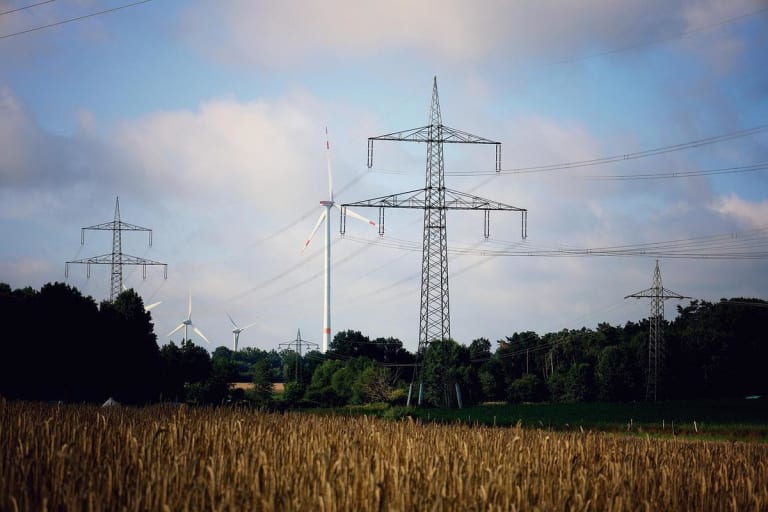
Transmission bottlenecks and generation curtailments dominate concerns in Brazil’s wind sector.
The wind sector in Brazil faces a landscape of uncertainties that threatens the expansion of investment. A recent survey indicates that limited transmission infrastructure and mandatory generation curtailments, known as curtailment, are the primary obstacles, accounting for nearly 80% of market participants’ concerns.
These hurdles directly affect the viability of new projects, as they undermine revenue predictability and raise the cost of financial structuring. The situation worsens at a time when the sector is testing a recovery, with large developments already confirming equipment orders.
Transmission Infrastructure Under Scrutiny
Limitations in the capacity to deliver power generated by wind farms have long been a critical issue. Earlier studies already identified connection bottlenecks as the main worry. Now, the consolidation of curtailment as an even greater risk underscores the urgent need for improvements to the transmission network of the National Interconnected System (SIN).
The lack of clarity in the rules for allocating the financial impacts of system-wide generation cuts is another factor that hampers investors’ decision-making. Predictability and regulatory transparency are seen as essential to attract new investment cycles.
New Demands Drive the Sector
The growing demand for renewable energy, driven by industrial electrification and the expansion of artificial intelligence data centers, presents a promising opportunity for the wind sector. However, the realization of new power purchase agreements (PPAs) depends on solutions for geographic convergence between supply and demand, as well as for managing wind generation volatility.
Planning network expansion and signaling appropriate prices are essential tools for guiding efficient private capital allocation. Reducing market asymmetries and better understanding the criteria and causes of generation cuts are crucial to mitigate risks and project revenues more accurately.
Technology and Sustainability in the Spotlight
Despite infrastructural challenges, the intrinsic attributes of wind energy remain a strong attraction. Low environmental and territorial impact is considered the main competitive advantage, followed by seasonal complementarity with water regimes, which ensures the energy security of the SIN. Corporate ESG goals and long‑term cost competitiveness also reinforce the source’s appeal.
At the same time, technological innovation is advancing to optimize equipment efficiency. Vestas introduced a new 7.2 MW turbine model, designed for moderate and weak wind regimes, aiming to increase annual energy generation and reduce the levelized cost of energy (LCoE) of projects. However, the manufacturer stresses that the full potential of these innovations is realized only with corresponding transmission infrastructure and regulatory clarity.
The Brazilian wind industry has the opportunity to capitalize on the growing demand for clean energy, but this requires a coordinated approach that includes grid expansion, regulatory improvements, and clear market signals. Progress on these pillars will be decisive for driving new investments and consolidating wind energy’s role in the country’s energy mix.