
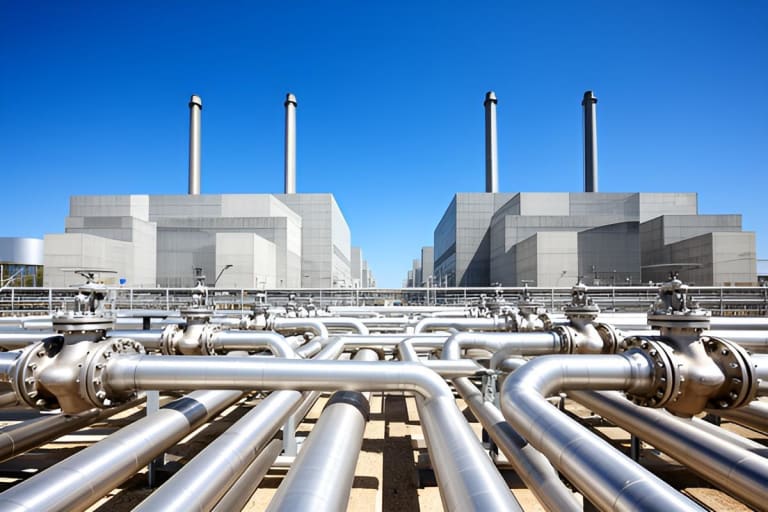
Natural gas consumption by thermal power plants connected to distribution networks surged 49% in the first half of 2026, driving changes in the national energy sector.
The Brazilian energy mix saw a significant shift in the first six months of this year. Thermal power plants integrated into state distribution grids considerably increased demand for the input, reaching an average level of 17 million cubic meters per day.
This advance represents the highest growth rate among all segments served by local utilities. The data are part of an official report released by Abegás (Brazilian Association of Gas Distribution Companies), which monitors the country’s traditional piped network.
Sectoral consumption dynamics and industrial leadership
Despite the remarkable jump by thermal units, the industrial sector remains dominant in absolute volume of usage. Factories recorded an average of 30.8 million cubic meters per day during the period, confirming an annual increase of 4.5%.
Other segments showed distinct variations over the semester. Use of the resource as a raw material in the chemical and fertilizer industry grew 8%, while the residential market saw a modest rise of 2.3%. Conversely, the automotive sector ended the period with a 7.4% decline in GNV usage, and cogeneration fell 5.3%.
Growth of the free market and regulatory debate
The Abegás study also highlighted the accelerated expansion of negotiations in the free contracting environment. Using June as a baseline, volume traded in this modality jumped 36.8%, reaching 34.6 million cubic meters per day.
Faced with this scenario of greater commercial openness, the sectoral entity reiterated its call for structural changes in governance and transparency of pricing. The proposal is to mirror the model adopted in the electric sector.
As highlighted by Abegás CEO Marcelo Mendonça:
“Just as it already happens transparently in the captive market, it is essential to require full public disclosure of supply contracts in the free market, providing clear and uniform price references for all participants. Assigning the management of this process and the monitoring of pricing to a trading chamber such as the CCEE will be the decisive step to give the governance and security the market needs to grow.”
Alongside commercial progress, transportation infrastructure and network reach have seen significant improvements. The total length of the piped network expanded by 3.6%, reaching 47.4 thousand kilometers and extending service to 520 Brazilian municipalities by mid‑2026.