
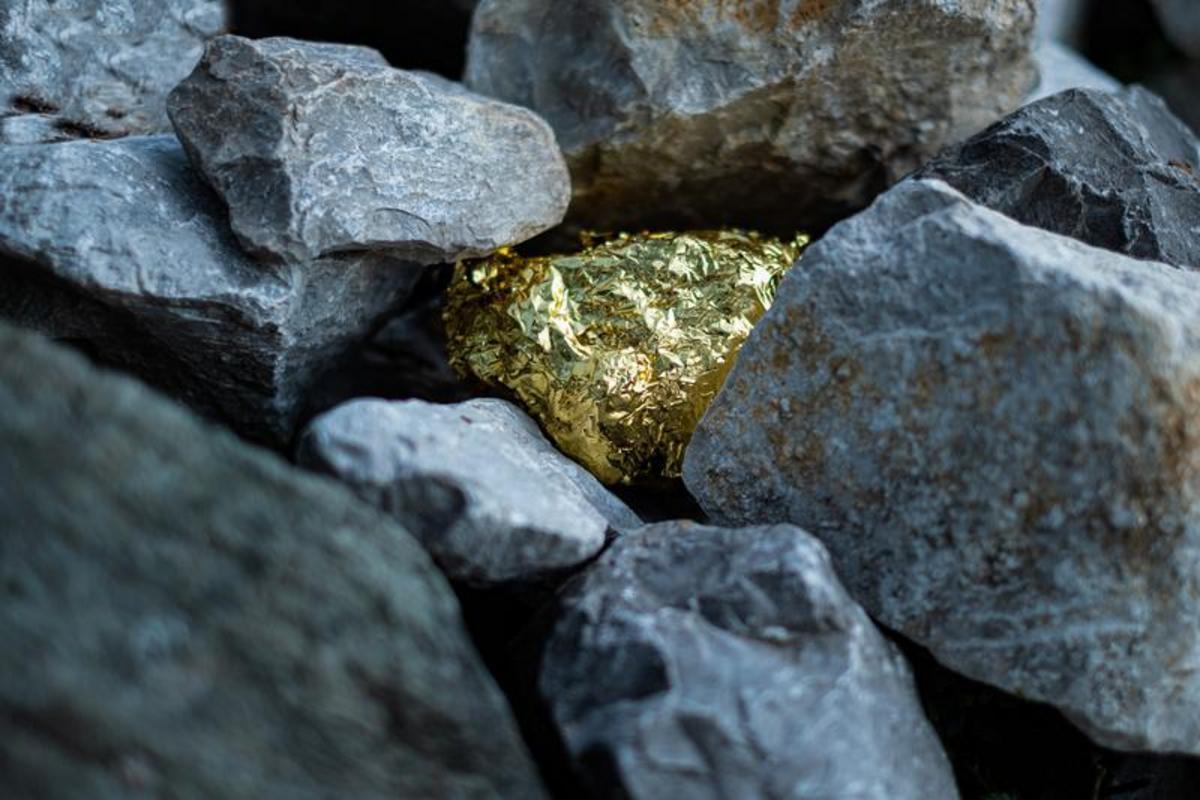
Composed of 17 essential elements for the energy transition and technology, rare earths contain four minerals that account for 90% of market value, driving everything from electric cars to wind power generators.
Rare earths are at the center of the global economic and geo‑strategic debate. This group of 17 chemical elements has become indispensable to modern industry, playing a decisive role in national defense, technological innovation, and the advancement of clean energy. In this context, Brazil holds a privileged position with about 21 million tonnes in mineral reserves, trailing only China, which leads with 44 million tonnes, according to USGS (United States Geological Survey) data.
Although they appear in everyday devices such as smartphones, medicines, and glass polishing, the true financial engine of this sector lies in the production of high‑field magnets. Geologist Klaus Petersen, a member of the AMC (Association of Critical Minerals), highlighted the importance of these components during his presentation at ABM Week, an event organized by ABM. According to the specialist, each element has unique physicochemical properties, but a small subset dominates industrial demand.
The chemistry behind functional materials
Understanding the structure of rare earths requires a look at the periodic table. These elements belong to the lanthanide group — encompassing 15 minerals with atomic numbers between 57 and 71 — plus scandium and yttrium. The full list includes lanthanum, cerium, praseodymium, neodymium, promethium, samarium, europium, gadolinium, terbium, disprosium, holmium, erbium, thulium, ytterbium, lutetium, scandium, and yttrium. Because they share very similar chemical characteristics, they often occur together in nature.
Classified as functional materials, these elements can modify the performance of conventional metallic structures, such as steel. Their addition significantly improves electrical conductivity, magnetism, malleability, and energy‑storage efficiency. However, the biggest obstacle in the supply chain is not geological abundance but processing complexity.
Geologist Klaus Petersen stated:
“The biggest problem with rare earths isn’t that they’re hard to find. The challenge is separating them, and that’s the most complex part of the production chain.”
The Four Giant Elements of the Market
Within the set of 17 minerals, four stand out significantly in economic terms and commercial application. They are the so‑called light rare earths—neodymium and praseodymium—and the heavy rare earths—dysprosium and terbium. Together, these four elements account for more than 90% of the global commercial value and consumption volume.
The specialist highlighted:
“It’s essential to know the four elements that make up the rare earths. The highlights are two of them, classified as ‘light rare earths,’ neodymium and praseodymium, and two considered ‘heavy rare earths,’ dysprosium and terbium. These elements represent over 90% of the value and 90% of the volume used.”
The Fundamental Role in Clean Technology and Energy
The high demand for these four minerals is driven by the production of high‑performance rare‑earth magnets. Unlike traditional ferrite magnets, which lose magnetic strength over time and with rising temperature, rare‑earth compounds maintain extremely high stability and magnetic force in compact sizes.
This magnetic efficiency was a watershed moment for the consolidation of electric mobility and renewable generation. Adding heavy elements such as dysprosium and terbium ensures that motors can withstand intense heat without losing performance.
The specialist explained:
“Electric cars, motors, wind energy generators, and MRI machines, for example, require large quantities of rare‑earth magnets. They stand out because, unlike ferrite magnets that lose their properties with heat and time, rare‑earth magnets are far stronger.”
Klaus Petersen added:
“With rare‑earth magnets, a much smaller mass is needed to achieve force, and by adding heavy rare earths, heat resistance can be increased. This made electric cars possible, since the motor heats up and with ferrite magnets the force would be lost quickly.”
Beyond heavy applications in the energy transition, component miniaturization has driven advances in microelectronics. Modern earbuds and small speakers exist only because of these powerful micro‑magnets. The other elements in the group, while high in unit value, serve specific industrial niches in limited quantities.
The geologist highlighted:
“Today you can fit a speaker inside the ear. Earbuds use a tiny rare‑earth magnet, and if we used ferrite magnets, the earbuds would have to be the size of an apple.”
He concluded:
“The remaining rare‑earth elements have specific applications and can even command higher prices, but the amounts used are very small, so they have a restricted market.”
Technical mastery of the extraction and beneficiation of these critical minerals is a crucial step toward sustainable industrial development and technological sovereignty. With global demand for decarbonization technologies rising, spreading knowledge of the rare‑earth value chain becomes essential. To train professionals and broaden this discussion, ABM is developing specialized courses for the mining and metallurgy sectors.