
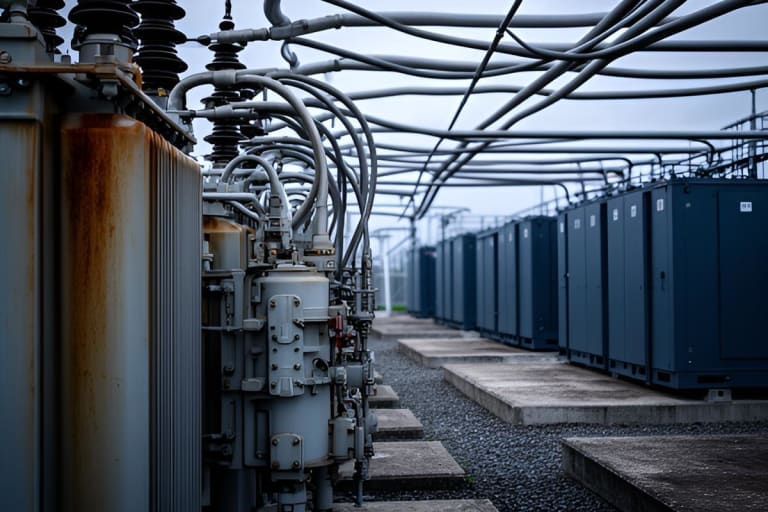
The Brazilian Association of Energy Storage Solutions (ABSAE) indicates that the available connection margin for the battery auction is robust, signaling a highly competitive scenario that should directly benefit the end consumer.
The energy sector in Brazil is experiencing a historic moment with the preparation for the first auction focused on energy storage. According to ABSAE, the grid infrastructure will not be a barrier to the sector’s development, ensuring that the auction proceeds smoothly and efficiently.
The organization bases its analysis on technical notes from the ONS (National System Operator) and the EPE (Energy Research Company), which indicate a 56 GW connection margin available for battery systems. This volume is five to twelve times higher than the estimated power demand for the 2028‑2030 period.
Infrastructure and Regional Opportunities
The survey shows that, at points with locational bonuses, the available connection margin reaches 13.7 GW. Of the 129 busbars benefiting, 93 have room for new projects. States such as Bahia, Piauí, Ceará, and northern Minas Gerais stand out as strategic hubs, with the technical capacity to enable the entry of these new technologies into the National Interconnected System.
With a substantial number of projects registered, ABSAE projects an auction marked by intense competition. This level of rivalry is a positive indicator for the sector’s economic sustainability and for the tariff moderation that will reach the end consumer.
Economic Viability and Auction Security
Regarding the values, the association states that the set prices—US$ 1.76 million per MW/year for domestic content and US$ 1.58 million without that requirement—are aligned with market expectations. These amounts reflect current technology costs and ensure the necessary attractiveness for investment.
“The values reflect the real costs of storage, make the auction attractive, and leave room for genuine competition.”
In addition, the economic‑financial eligibility rules were praised by the organization. ABSAE notes that adjusting the guarantees, combined with revising the reference investment to R$ 6 million per MW, balances the need for rigor with sector support. According to the entity, this filter is essential to ensure project delivery:
“The notice filters out adventurers while not excluding those with real capacity to deliver.”
Diversification and Market Competitiveness
The success of this clean energy auction also depends on the diversity of participants. The involvement of transmission companies, Private Equity Funds (FIPs), and pension entities is seen as a strategic differentiator. While transmission companies bring operational expertise, the long‑term capital of the funds aligns perfectly with the 15‑year contract duration.
The expectation is that integrating these different investor profiles will strengthen project financing. By fostering an environment with multiple actors and high competition, the country paves the way for batteries to become essential assets for national resilience and energy transition. The future of energy storage in Brazil looks promising