
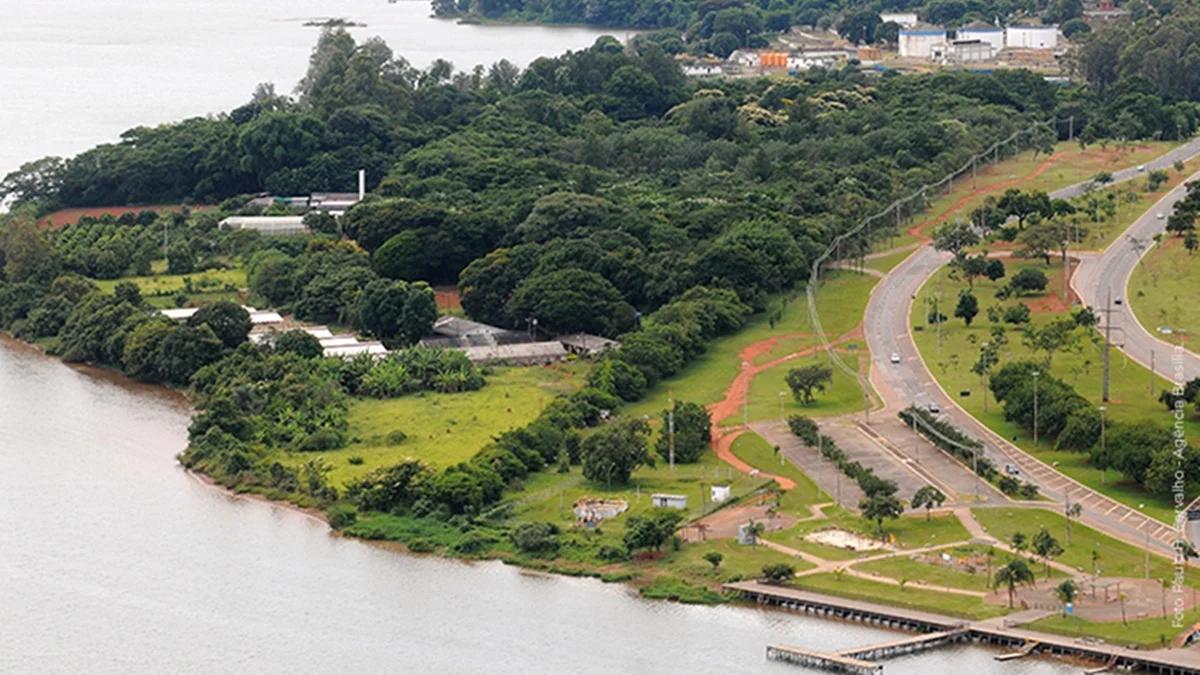
The Federal District Government has formalized a new territorial plan for the North Exit region, setting strict land-use, urban occupation, and environmental protection guidelines over 3.16 million square meters.
The Urban Development and Housing Secretariat (Seduh-DF) recently released the Urban Territorial Study (ETU) for a strategic area located between Norte Lake and Varjão.
The document marks a decisive step toward organizing growth around the highways BR-020, DF-006, and DF-007, balancing real estate expansion with the preservation of local natural resources.
The plan results from a process that included public hearings, gathering input from experts and residents of the area.
The primary focus of the measure is to ensure that future residential, commercial, or institutional developments respect existing infrastructure and the fragility of the ecosystem, prioritizing basic sanitation and environmental impact control.
Strategic territorial division
To organize development, the ETU divided the area into three distinct zones with specific purposes.
Zone A, aimed at institutional activities and services, covers about 714.2 thousand square meters and requires strict construction control to preserve ecological corridors linking Brasília National Park to the Paranoá Lake APA.
Zone B, covering 528.1 thousand square meters, concentrates the potential for residential and commercial densification.
The goal is to create integrated spaces where homes and services are close together to reduce travel needs, always conditioned on projects that combat erosion and sedimentation.
Finally, Zone C acts as an environmental protection barrier, restricting new subdivisions and focusing strictly on sustainable recreation.
“The regulations aim to align real estate growth with environmental preservation and the sustainability of local infrastructure.”
Impact and legal security
While the study provides a clear direction for urban development, Seduh-DF emphasizes that the document serves as a guideline of principles.
This means it does not replace the need for specific permits nor automatically grant approval for projects, maintaining the requirement that each project strictly complies with current environmental legislation and the regularization procedures of the Federal District.
The future of this area in North Exit now depends on alignment between the private sector and public authorities.
By imposing requirements such as banning mirrored façades—a measure aimed at protecting local wildlife—and mandating water infrastructure, the government seeks to avoid common planning mistakes in rapidly expanding regions.
Monitoring the implementation of these guidelines will be essential to understand how the DF will balance housing deficits with the protection of its water sources and green areas.