
Brazil Accelerates Search for Natural Hydrogen, a Promising Clean Energy Source
Brazil is taking significant steps in exploring new frontiers for clean energy.
The Geological Survey of Brazil (SGB) is leading a pioneering project aimed at mapping the national territory’s potential for the occurrence of natural hydrogen, a renewable energy source with great promise.
The research is in its early stages, but it already demonstrates the country’s commitment to diversifying its energy mix with sustainable solutions.
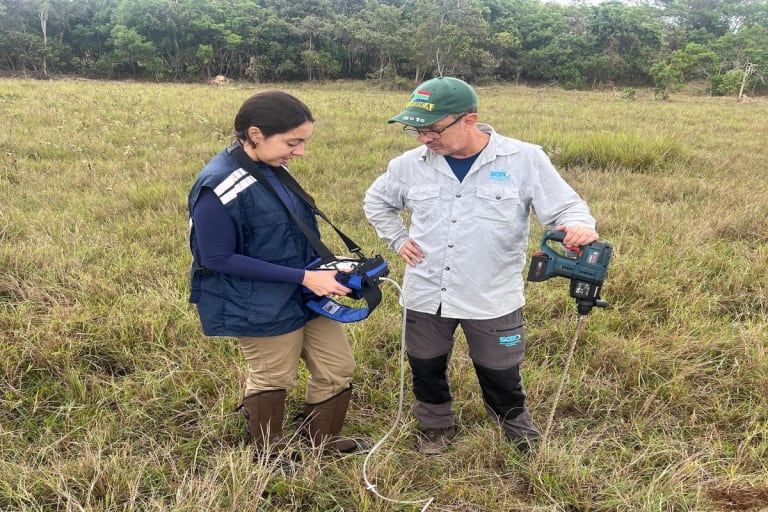
Recently, between October 1 and 8, SGB teams conducted field surveys in strategic areas of Minas Gerais.
The initiative, part of Brazil’s Natural Hydrogen Potential Assessment Project, included detailed gas measurements and geophysical investigation activities.
The main goal is to collect critical data that will support the creation of a comprehensive map of this valuable resource’s prospectivity.
Mapping and Research: The Pillars of Discovery
The project goes beyond field surveys.
One focus area is cataloging all documented occurrences and indications of natural hydrogen in the scientific literature, as well as those identified in new studies.
This information will be compiled and organized on the BaseGEO platform, ensuring greater accessibility to data on Brazil’s energy potential.
Simultaneously, the SGB will use remote sensing techniques to identify possible surface manifestations of hydrogen, initially focusing on the São Francisco Basin.
Collaborations with universities and other federal agencies are also seen as essential for developing joint studies and knowledge exchange.
The Natural Hydrogen Prospectivity Map of Brazil is expected to be published in 2027, serving as a guide for future explorations and detailed studies across various regions of the country.
Natural Hydrogen: The Potential of a Clean Energy
Natural hydrogen is a gas with great potential for producing clean energy.
It can be generated through specific chemical reactions in favorable geological settings.
One of the most studied reactions is serpentinization, which occurs when the mineral olivine reacts with water, producing natural H₂.
Current research focuses on identifying the presence of this trapped gas in rock fractures.
The field phase was preceded by intensive training led by Alain Prinzhofer, a renowned researcher in the field.
The course covered the complex geological and geochemical processes involved in the generation, migration, and occurrence of natural hydrogen, as well as its role as an energy resource and its contribution to the global energy transition.
From Theory to Practice: Field Immersion
The training included an important practical gas‑measurement phase conducted in Maricá, Rio de Janeiro.
This region is already known for natural hydrogen manifestations and served as a laboratory for the project team.
Participants had the opportunity to handle investigative equipment and apply the theoretical knowledge gained in real observations.
The project team consists of geologists Márcio Silva and Paulo Dias, and intern Mariah Rangel.
The initiative by the Geological Survey of Brazil underscores the importance of research and development for identifying new sustainable energy sources.
Mapping natural hydrogen represents a bold step toward a cleaner, more diversified energy future for Brazil, aligned with global goals to combat climate change and promote sustainable development.