
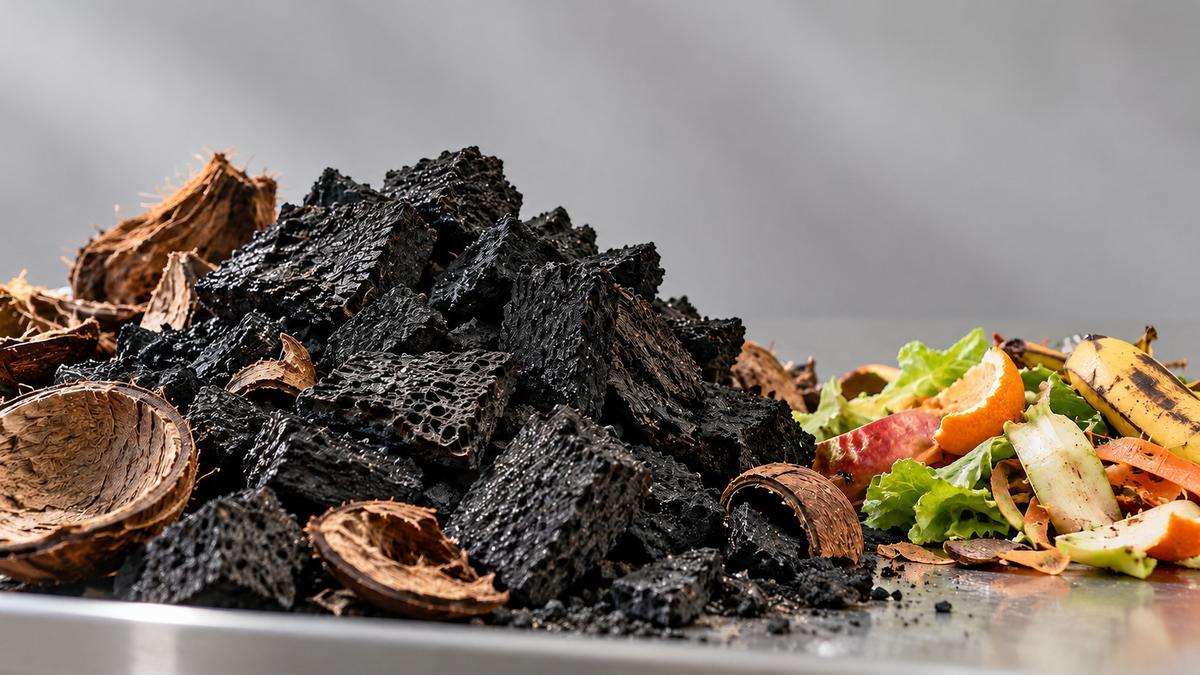
Chinese scientists boost methane production in waste digestion with walnut shell biochar.
Researchers in China have achieved a notable breakthrough in the anaerobic digestion of organic waste, specifically food scraps and sewage sludge. Adding biochar derived from walnut shells had a significant impact, increasing cumulative methane yield by an impressive 26.7%. This finding, from experiments conducted at 55 °C, suggests a promising potential to optimize biogas generation from urban and industrial waste streams.
The study, released in April 2026, not only raised the total amount of methane produced but also accelerated the process. The peak gas production rate rose dramatically by up to 34.6%, indicating improved temporal efficiency in organic matter decomposition. This dual benefit—higher volume and shorter processing time—is crucial for the economic and operational viability of biodigesters.
Study Details and Different Biochars
The investigation compared the effectiveness of biochars made from various materials: bamboo, pig manure, and the promising walnut shells. The shell-derived material stood out as the most efficient. Before adding biochar, the yield was 310.5 mL of methane per gram of volatile solids. After applying walnut shell biochar, that figure jumped to 393.4 mL/g SV, a substantial increase that validates the research.
Beyond the yield increase, walnut shell biochar contributed to process stability. A reduction in propionate accumulation—an intermediate that can inhibit methanogenesis—was observed, along with improved system ability to maintain stable pH. Subsequent analyses revealed enrichment of microorganisms essential for waste degradation and subsequent methane production, highlighting the biochar’s role as a bio-stimulant. Interestingly, variations in biochar particle size within the tested millimetric range did not significantly affect process performance.
The Role of Biochar in Anaerobic Digestion
The use of biochar as an additive in anaerobic digestion systems is not entirely new. A scientific review published in 2023 and cited by the Chinese researchers already highlighted similar benefits in earlier studies. The proposed mechanisms to explain this improvement include maintaining chemical balance in the reaction medium, fixing and enriching beneficial microbial populations, and facilitating electron transfer between different microbial species.
These findings reinforce the growing interest in the practical application of biochars to optimize biogas production. However, the authors of the Chinese study emphasize the need for a holistic approach. Performance analysis should go beyond methane production, taking into account environmental and economic factors intrinsic to waste management and greenhouse gas emission mitigation. The effective integration of biochar with anaerobic digestion processes, rather than just its isolated gains, will be essential for scaling this technology to industry level.