
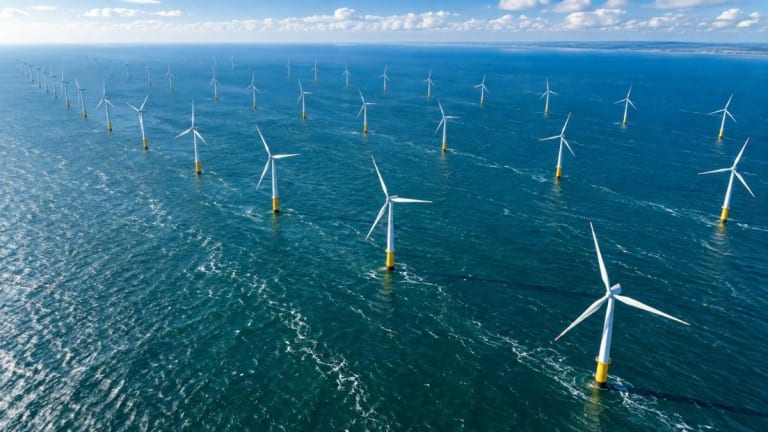
An official survey reveals that Brazil has six port complexes geared toward offshore wind energy, but none of them has the necessary infrastructure to launch large projects immediately.
The Brazilian energy transition is making important strides, yet it encounters significant structural and regulatory bottlenecks. A joint assessment prepared by the Ministry of Mines and Energy and the Ports and Airports department indicated that the national logistics chain still requires deep reforms to enable offshore electricity generation. The document was released during the Brazil Windpower 2026 event held in São Paulo.
While mapping sites with high adaptation potential, the report makes it clear that large-scale initiatives remain unfeasible in the current landscape without substantial financial backing and legislative changes.
Infrastructure challenges and the sheer size of turbines
The technical complexity of offshore wind energy starts with the equipment size. Modern turbines are monumental in scale, making road transport of their blades and towers logistically unfeasible or prohibitively expensive. For this reason, maritime terminals must function as central hubs for manufacturing, storage, and direct ocean deployment.
The physical limitations found at Brazilian piers concern experts. Most existing facilities were not designed to support the concentrated weight of gigantic components, requiring structural reinforcements capable of bearing loads exceeding ten tons per square meter. Additionally, restrictions on channel width and the scarcity of nearby land areas limit operations.
Preparing ports requires not only heavy engineering to reinforce piers but also a thorough review of bureaucratic processes to ensure legal security for investors
Rio Grande Leads Short-Term, Bureaucracy Stalls Progress
Among the sites mapped by the government, the Rio Grande complex in Rio Grande do Sul stands out as the most viable short-term option. Other potential hubs include Imbituba, Porto do Açu, Porto Central, Suape, and Pecém. However, all share the same obstacle: insufficient physical space for maneuvering and adequate storage of heavy materials.
Beyond physical barriers, investors face a bureaucratic maze. The Ibama, the Brazilian Navy, ANTAQ, and ANEEL operate with disconnected rules and timelines. The lack of synchronization between port lease agreements and environmental licensing creates financial uncertainty, hindering the attraction of private capital to the sector.
The future of offshore renewable energy depends directly on aligning the new regulatory framework with logistical modernization projects. Without this integration of port infrastructure and institutional agility, the potential of Brazil’s coastal winds will remain untapped.