
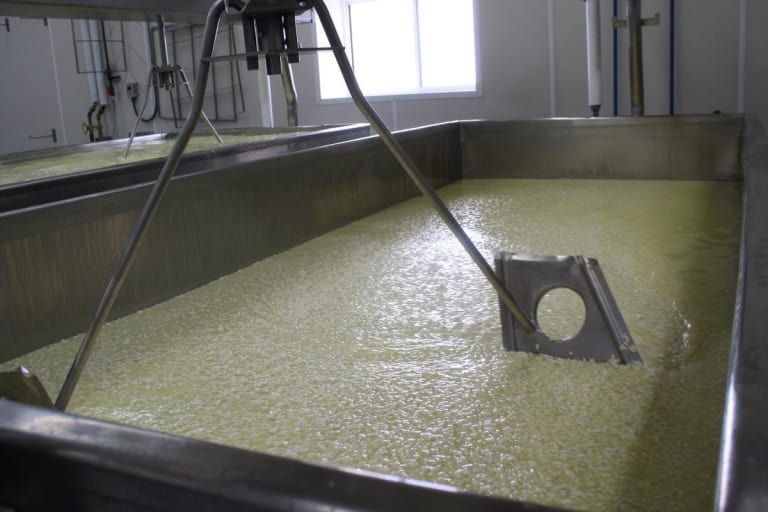
Scientists in the United Kingdom are turning salty cheese whey into bioethanol, creating an innovative clean energy pathway for dairy industry waste.
The search for alternative energy matrices has found an unusual ally in British dairy plants. A technological breakthrough led by Heriot-Watt University and the startup Take Root Bio has successfully converted salty whey, a problematic byproduct of cheese making, into high-quality bioethanol.
The initiative, recently announced, tackles a long-standing bottleneck in the food sector. In the United Kingdom alone, the production of cheeses like cheddar generates about 95,000 tons of this residual liquid annually. Composed of a complex mixture of milk sugars and high salt concentrations, the material has historically required costly and logistically complex disposal.
Waste Management Challenges and Energy Potential
The great merit of the research was isolating the sugars present in the byproduct and using them in biological fermentation processes. The ICBD (International Centre for Brewing and Distillation) joined forces with IBioIC (Industrial Biotechnology Innovation Centre) to design this valorization route.
Although the volume generated by a single producer reaches tens of thousands of liters weekly, the project is still evaluating commercial scale and exact conversion yields. However, researchers emphasize that the innovation goes beyond simply generating sustainable fuel, paving the way for a circular economy in the agricultural sector.
Shiwen Zhuang, a specialist at Heriot-Watt University, highlighted:
The work allowed us to investigate how biological processes could recover some of the value present in the whey and alleviate the difficulties associated with disposal.
From Space Technology to Dairy Plants
The expertise behind the technology has surprising roots. Take Root Bio applied concepts originally developed for food production and recycling in space environments to the project, where efficiency and total resource reuse are matters of survival.
To make the large-scale model viable, the company is studying the creation of mobile processing units. The idea is to position these structures directly next to dairies, eliminating the costs and carbon footprint associated with transporting large volumes of liquid waste.
The success in converting dairy whey has paved the way for new investigations. Researchers now plan to apply similar methodologies to agricultural waste and fruit and vegetable processing, consolidating the potential of biofuels in reducing environmental impacts.