
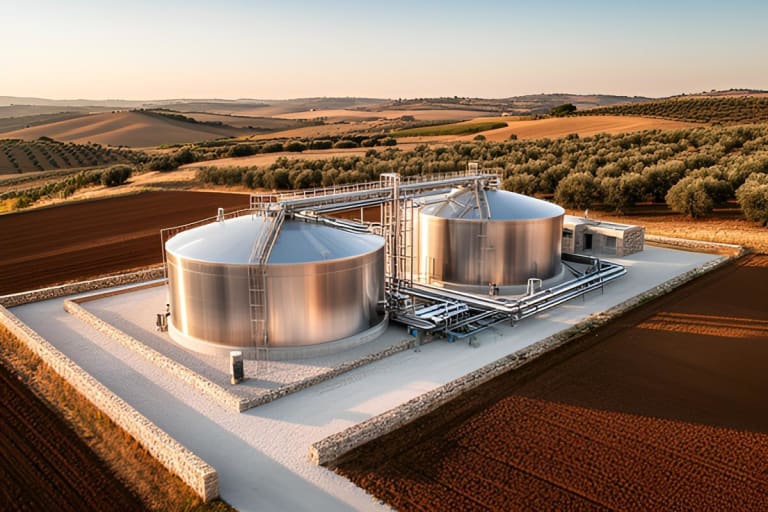
A new biomethane plant in southern Italy transforms agricultural waste into clean energy, preventing the emission of thousands of tons of carbon per year.
The energy transition in Europe has gained a new strategic ally with the commissioning of a modern biomethane plant in southern Italy. Located in the municipality of Grottole, the facility promises to transform agricultural and livestock sector waste into renewable fuel.
With the capacity to generate 45 gigawatt-hours (GWh) per year, the facility will significantly reduce the regional ecological footprint. The project is estimated to prevent the annual emission of approximately 9,000 tons of CO₂ into the atmosphere.
The initiative represents a fundamental step toward diversifying Italy’s energy matrix. The country aims to reduce its historical dependence on imported fossil fuels by leveraging its own distribution infrastructure.
Energy challenge and biogas expansion
Currently, natural gas accounts for about 46% of the electricity generated in Italy. This volume is three times greater than hydroelectric production, cementing the resource as a pillar of the national system.
Despite having an extensive pipeline network spread across the country, Italy produces very little fossil raw material domestically. This reality has driven the search for sustainable, domestically sourced alternatives.
Between 2022 and 2026, biomethane production capacity in the Italian market is projected to jump from 0.25 billion to 1.6 billion cubic meters. This advancement positions biofuels at the forefront of local energy production.
Operational progress and circular economy
Acquired in 2024 by the European group Axpo, the Grottole plant in the Basilicata region began operations in July. The project is halfway through its initial phase of testing and operational adjustments.
The plant uses agricultural byproducts from regional farms to produce low-carbon gas and fertilizers, strengthening the circular economy.
Integration with local rural producers ensures a continuous supply of raw material for the plant. In addition to biofuel, the process generates organic fertilizers that return to the fields, closing the sustainability loop.
Sustainable impact and future outlook
The success of the operation in Grottole reinforces the viability of biomethane as a direct substitute for fossil natural gas. The strategy utilizes the existing transportation network without requiring costly infrastructure overhauls.
As Europe accelerates its decarbonization targets, projects integrated with the agricultural sector are expected to multiply. The initiative cements Italy‘s leadership in the production of clean and renewable energy sources.