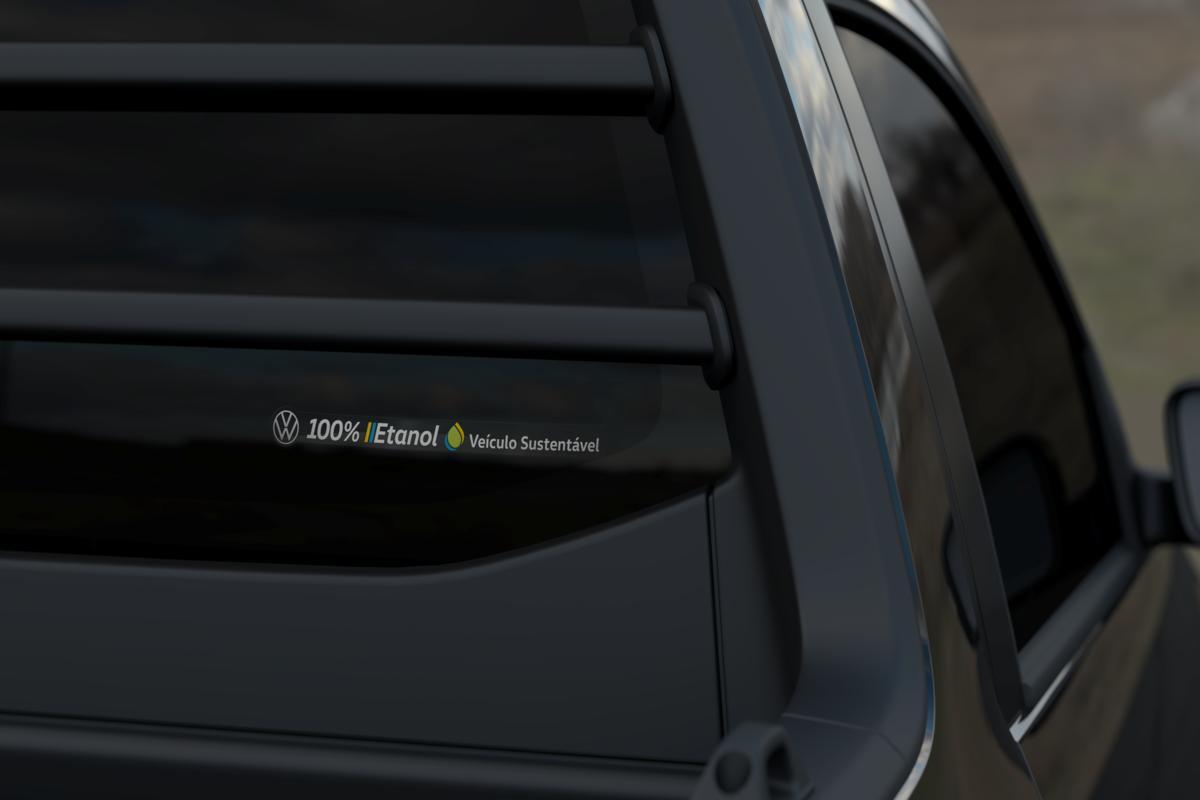
Volkswagen is launching the new Saveiro Robust Ethanol in the Brazilian market. As the first compact pickup truck under the Sustainable Car Program, the model arrives with a lower price tag than the flex-fuel version, highlighting a commitment to clean energy.
The transition toward a greener national fleet has received a significant boost in the clean energy sector. Volkswagen has just announced the arrival of the Saveiro Robust Ethanol, a unique configuration developed to run exclusively on the biofuel. With over four decades of history in the country, the compact pickup is reinventing itself to meet sustainability demands without sacrificing the traditional ruggedness expected by Brazilian drivers.
The key differentiator for this new version is its pioneering integration into the Federal Government’s Sustainable Car Program. With a suggested retail price of R$ 111,490.00, the pickup hits dealerships in October, positioned R$ 4,200.00 below the equivalent flex-fuel version. This aggressive commercial strategy aims to attract companies, fleet operators, rural producers, and the general public, facilitating the adoption of sustainable mobility technologies.
Innovation and Performance with Biofuel
Equipped with the well-known 1.6 MSI engine, the pickup underwent more than 740 hours of development by Volkswagen engineers. The compression ratio was optimized to take full advantage of the biofuel’s knock resistance, reaching 11.5:1. This fine-tuning results in a 5% gain in energy efficiency and a significant improvement in urban fuel economy, reaching 8.5 km/l in the combined cycle.
Ciro Possobom notes:
“The Saveiro has stood by those who work and produce in Brazil for 44 years. Now, we are giving these customers a new choice: a pickup engineered to run exclusively on ethanol—a fuel that the country knows and produces, which creates jobs and income, and serves as a major Brazilian advantage in the transition to lower-carbon mobility.”
Environmental Impact and Emission Reductions
The focus on renewable sources yields impressive results in the well-to-wheel assessment. While traditional flex-fuel models record higher averages, the new ethanol-only configuration emits only 50g of CO2 equivalent per kilometer, comfortably meeting environmental requirements and reinforcing Brazil’s strategic role in the global energy transition.
Ricardo Plöger emphasizes:
“For the Saveiro Ethanol, our focus was to extract the best energy yield from the fuel, resulting in greater daily efficiency and reduced consumption. Beyond the economic benefits for the customer, ethanol is a renewable fuel with a smaller carbon footprint compared to fossil fuels.”
The launch of the Saveiro Robust Ethanol marks a new era for utility vehicles in Brazil, proving that it is possible to combine performance, affordability, and sustainability. By investing in a dedicated engine, Volkswagen not only champions a national energy source but also provides practical tools for companies and consumers to reduce their carbon footprints. Over the coming months, the market’s reception of this model will serve as a barometer for the advancement of clean fleets in the country.