
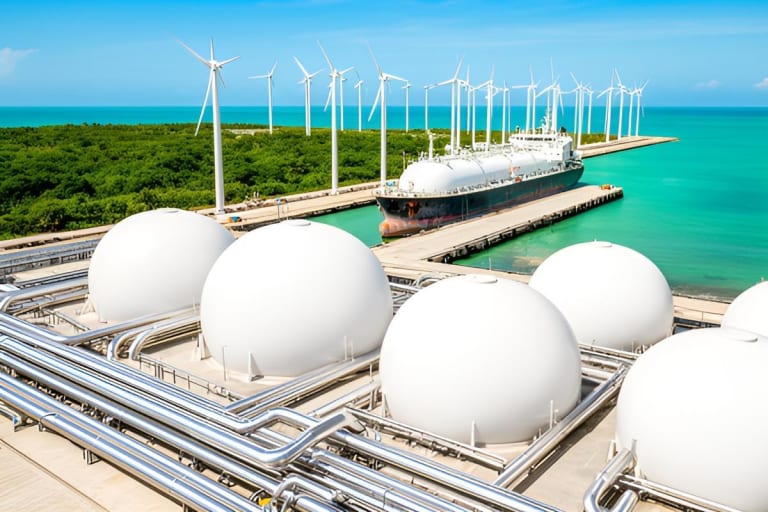
Japanese Ambassador Yasushi Noguchi has reinforced that Brazil holds strategic potential to become a global exporter of green hydrogen, relying on Japanese technological support.
The global energy transition scenario places Brazil in a privileged position. Featuring one of the cleanest electricity matrices in the world, the country is viewed as a leading protagonist in the production of green hydrogen, an essential fuel for decarbonizing hard-to-abate sectors. This expectation was reaffirmed by Japanese Ambassador Yasushi Noguchi during his participation in the Brazil Export Forum.
For Noguchi, the transition to this new energy frontier depends not only on production capacity, but also on robust logistics. The diplomat highlighted that the bilateral partnership could be the deciding factor in overcoming infrastructure barriers, including maritime transport and large-scale safe storage, areas where Japan’s expertise is internationally recognized.
Technology and Infrastructure as Keys to the Sector
Green hydrogen, generated from renewable sources via electrolysis, faces significant technical challenges, particularly regarding energy density and transportation. Because the gas requires specific liquefaction or conversion conditions, the integration of efficient ports is essential. The ambassador pointed to port infrastructure as the key piece to turning Brazil’s potential into a commercial reality.
“We believe this visit will contribute to resolving challenges such as large-scale storage, international logistics, and the development of port infrastructure in Brazil, a country expected to become, in the future, an exporter of hydrogen and green hydrogen.”
Learning from the Japanese Model
As part of this cooperation, a delegation from Brazil Export will visit Japan in November to tour facilities such as the port of Kobe. The terminal is considered a global benchmark in the efficient receipt and distribution of energy, serving as a model for the logistical planning that Brazil needs to implement in its port complexes, such as Itaqui and São Francisco do Sul.
Collaboration between the two nations is not unprecedented. Japanese capital is already present in Brazilian infrastructure and urban mobility projects, and this partnership is expected to deepen. The expectation is that the exchange of knowledge will help reduce supply chain operating costs, making the green hydrogen produced on national soil more competitive in the foreign market.
The next step to consolidate this ambition involves unlocking investments in logistical corridors that connect renewable generation zones to export ports. With Japanese technological support and an abundance of natural resources, the country is competitively positioned to supply global demand for clean energy, consolidating its role in global sustainability over the coming decades.