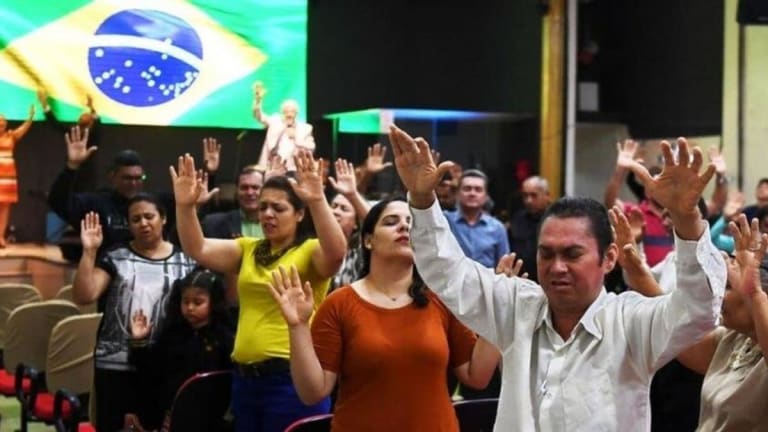
The advancement of social agendas and the use of party resources reveal the political weight and the commercialization of faith in Brazilian elections.
The influence of religion on the political direction of Brazil has taken on alarming financial proportions during recent elections. Religious leaders from various denominations have been actively working to direct the votes of their followers, turning temples into true campaign platforms and charging substantial sums to support certain political projects.
Vote-cooptation strategies have involved hundreds of thousands of reals in party fund transfers. This scenario exposes the strong connection between ecclesiastical power and the dispute for public office, revealing a mechanism where faith is used as a bargaining asset in campaigns across different ideological spectrums.
Million-dollar transfers and misuse of funds
The use of public funds to finance candidacies linked to religious leaders has drawn attention due to its opacity and the amounts involved. In specific scenarios, resources originally allocated to federal campaigns were redirected to state-level candidates, directly benefiting figures from the evangelical community.
Analysts point out that the capillarity of churches facilitates the transmission of political messages to their congregations.
The commercialization of faith and the use of public funds to secure political influence erode the boundaries between State and religion
experts in electoral law evaluate, concerned about the oversight of these resources.
The expansion of religious empires in politics
The rapid multiplication of temples and denominations across the country goes hand in hand with a successful strategy of occupying spaces of power. The economic consolidation of major religious networks has facilitated the creation of solid electoral bases, ensuring significant representation in municipal, state, and federal parliaments.
The impact of this alliance between pulpit and ballot box profoundly alters the democratic debate, prioritizing moral and social agendas to the detriment of structural projects for the country. The lack of rigor in accountability to the Superior Electoral Court (TSE) opens loopholes for questionable practices to continue shaping the nation’s political future.
Credits: agenciacongresso.com.br