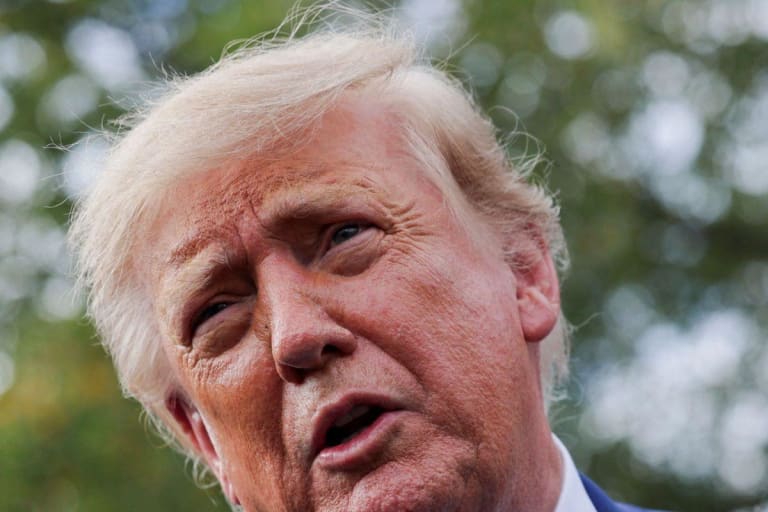
President Donald Trump points out that operational bottlenecks in American and Russian refineries, rather than the Strait of Hormuz, are the true culprits behind rising fuel prices.
The dynamics of gasoline prices in the United States are experiencing a new phase of volatility, but the White House‘s focus has shifted away from traditional geopolitical tensions and toward energy processing infrastructure.
President Donald Trump stated that the upward pressure on fuel costs at the pump no longer stems from the risks associated with maritime shipping in the Strait of Hormuz.
According to the president, the flow of crude oil barrels through the region has been normalizing, with record numbers being registered daily.
For the administration, this easing of transit via the Middle East demonstrates that the security of maritime routes is not the primary obstacle to the global supply of the commodity at this time.
The Refining Bottleneck
The central thesis presented by Trump lies in refining challenges. On one hand, the president points to the impact of recent Ukrainian strikes against energy facilities in Russia, which have reportedly drastically reduced Russian processing capacity.
On the other hand, the administration criticizes domestic management, particularly in states governed by the Democratic Party, such as California.
According to the president, the shutdown of refining units driven by restrictive local policies has limited the supply of fuel in the domestic U.S. market.
This combination of factors—internal logistical inefficiency and the destruction of assets in the conflict zone—is said to be creating a cascading effect on final consumer prices.
Record numbers of barrels are once again flowing through the strait almost daily, reducing the pressure caused by the Middle East conflict on the commodity’s supply.
Projections and Context
The statements come amid a highly sensitive scenario for the energy sector.
With the Ukrainian Ministry of Defense reporting progress in neutralizing Russian refineries, the market is closely watching the imbalance between crude oil supply and the actual capacity to transform it into ready-to-consume derivatives.
In the long run, the stabilization of gasoline prices will depend both on the outcome of external conflicts affecting productive infrastructure and on adjustments to domestic energy policy in the United States.
The market is now waiting to see whether the federal government’s signals regarding refinery operations will translate into practical measures to expand installed capacity and relieve the burden on American taxpayers.