
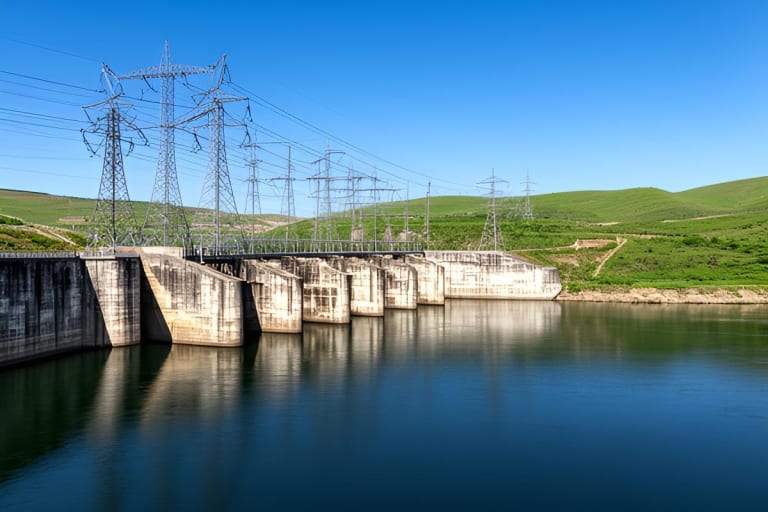
The Southern region leads with 83% reservoir storage, while the Southeast/Midwest, North, and Northeast record slight drops in clean energy.
Brazil’s power sector presents a scenario of contrasts in the management of its water resources. While the Southern region stands out positively by reaching an expressive 83% of its total storage capacity, the country’s other subsystems are moving in the opposite direction, facing a retraction in their reservoir levels.
This dynamic reinforces the complexity of the national energy matrix, where balance among regions is essential to guarantee supply security and the stability of the national interconnected system. Constant monitoring of the energy transition and hydroelectric generation is becoming increasingly strategic to avoid operational bottlenecks.
Subsystem performance across the country
According to the latest sector data, the submarket comprising the Southeast and Midwest showed a 0.2 percentage point decline in its capacity. Although the variation seems small, the region is the country’s main river basin and demands redoubled attention from power sector operators.
In the North of the country, the retraction was slightly more pronounced, recording a 0.4 percentage point drop. Following the same downward trend, the Northeast also registered a 0.3 percentage point reduction in its reservoirs, highlighting the impact of recent weather conditions on renewable energy generation.
The integrated management of Brazilian reservoirs is the pillar that sustains the security of the power sector, requiring constant adaptations in the face of climate variability.
Outlook for the renewable energy sector
The discrepancy between the performance of the South and the other regions illustrates the inherent challenges of operating a predominantly hydro-based matrix. Experts point out that diversifying the energy matrix with solar and wind sources is essential to mitigate the impacts of these seasonal fluctuations.
Going forward, expectations are that regulatory agencies will intensify strategic planning and the optimization of water use. Rigorous monitoring of reservoir levels will remain crucial to ensuring the continuity of investments in sustainability and energy efficiency in Brazil.