Grupo Atem has inaugurated a new logistics base in Itacoatiara to optimize fuel transport in the Amazon, ensuring essential supply during the low-water season through strategic river transshipment operations.
To address the challenges posed by the severe drought in the Amazon region, Grupo Atem has launched a strategic river operation in Itacoatiara (AM). The facility, enabled by Navemazônia, the company’s logistics arm, is designed to mitigate the impact of river navigation restrictions, ensuring a continuous flow of oil and its derivatives to Manaus and other municipalities in the state.
This initiative is the cornerstone of a robust logistics plan that combines climate monitoring, stock anticipation, and fleet modernization. The goal is to prevent shortages in one of Brazil’s most complex regions for transport operations, where fluctuating river levels demand constant flexibility and applied technology.
Strategic operation against climate impacts
The operational plan is supported by technical data from Labclim, a laboratory at the State University of Amazonas (UEA), which monitors hydrological trends. While the current scenario presents unique challenges compared to previous years, Grupo Atem’s preparation reflects the experience gained during the historic droughts of 2023 and 2024. The integration between the Refinaria da Amazônia, Atem Distribuidora, and the company’s road and river transport divisions allows for a coordinated response to any changes in navigability.
Compared to 2024, the number of tanker barges in operation has more than doubled. This reinforcement allows logistics to be adapted with greater agility, utilizing vessels with varying drafts to navigate critical sections of the rivers without compromising cargo integrity.
Guilherme Santana, Vice President of Distribution and Operations at Grupo Atem, highlights:
“In previous droughts, we learned in practice that there is no single solution to face navigation restrictions. It is necessary to combine early stockpiling and travel, different vessels, routes, and modalities. Today, we combine this experience with the information produced by climate monitoring to make decisions further in advance.”
Adaptive logistics: Ship-to-barge and supply security
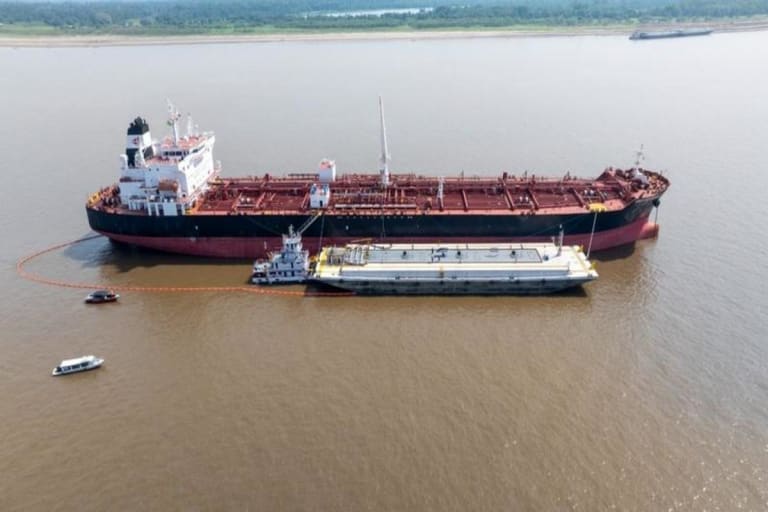
One of the most critical points for regional logistics is Costa do Tabocal, where low water levels prevent the passage of large ships. The new base in Itacoatiara solves this bottleneck through the ship-to-barge model, where fuel is transferred from ocean-going vessels to smaller tanker barges, capable of navigating safely through narrower or shallower channels to their final destination.
In addition to serving the general fuel market, the operation plays a fundamental role in supplying thermoelectric plants. Currently, Grupo Atem supplies over 90% of the plants in the state, ensuring the generation of clean energy and conventional power needed for hospitals, schools, and essential services in isolated cities that rely exclusively on this logistics supply chain.
Guilherme Santana reinforces:
“When we plan logistics for the dry season, we look at the entire fuel journey. There are locations where this supply is also directly linked to power generation and the operation of essential services. Therefore, inventories, vessels, routes, and alternatives must be prepared before the most critical period.”
With the consolidation of this operation, Grupo Atem reaffirms its commitment to operational resilience in the Amazon region. The ability to predict adverse climate scenarios and act preventively through logistics infrastructure ensures not only commercial efficiency but, above all, energy security for the riverine and urban communities of Amazonas in the coming months.