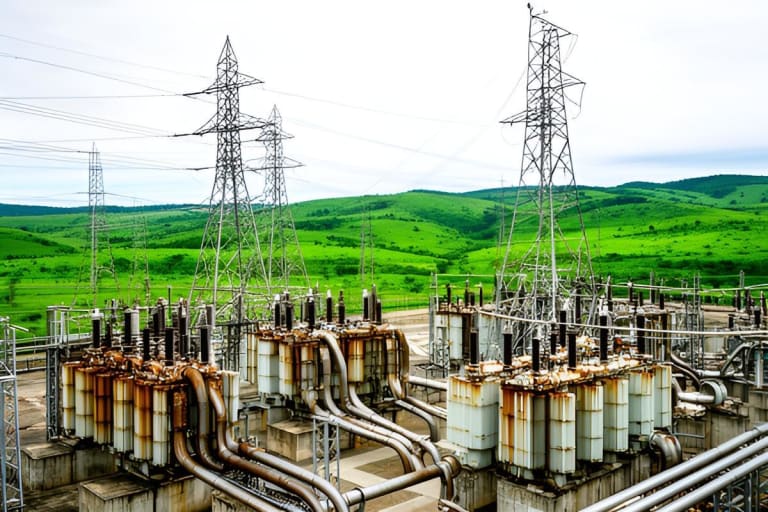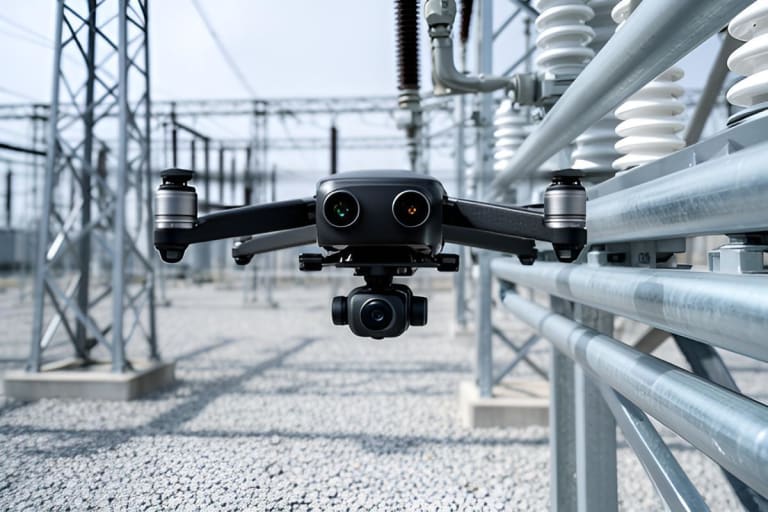
Axia invests R$ 28 million in drones to modernize substation inspections, focusing on safety and energy efficiency.
Axia Energia has taken a significant step forward in modernizing its operations by using drones for the first time to perform remote inspections at strategic substations.
The units in Jacarepaguá, Rio de Janeiro, and Foz do Iguaçu, Paraná, served as the initial settings for this technological innovation.
The ambitious project involves an investment of approximately R$ 28 million.
The primary focus is to raise safety standards for employees by minimizing their exposure to risks inherent in field activities.
Additionally, the initiative aims to improve early fault detection, optimize nighttime patrols, and accelerate crucial decision-making for maintenance.
BVLOS Technology and 3D Modeling: The Heart of Innovation
The technology used, known as BVLOS (Beyond Visual Line of Sight), allows drones to operate without the pilot needing direct visual contact with the aircraft.
This is made possible by an automated base and the generation of high-precision 3D models, which provide a comprehensive view of the monitored facilities.
Axia Energia plans to expand this remote inspection method to another 150 assets over the next four years.
This expansion reinforces the company’s commitment to continuous innovation in its processes.
Digital Integration and Enhanced Autonomy
A major differentiator of this solution is the integration of drones with Substation Building Information Modeling (BIM).
This virtual representation of the assets allows the data collected by the drones to be directly associated with the physical infrastructure, enriching the analysis.
The drones in question feature advanced onboard technology, with a flight autonomy of up to 50 minutes.
Equipped with thermal cameras, advanced zoom capabilities, and detailed image storage capacity, they automatically offload data upon returning to base.
The operation is conducted remotely by duly qualified professionals.
Lucas Pinz, director of the Digital Excellence Center at Axia Energia, explained:
“This initiative demonstrates how innovation and technology can be used to improve efficiency and safety in essential activities. The project is part of a digital strategy that tracks assets from studies and construction through to operation and maintenance stages, allowing information generated throughout the entire journey to add value to the company”
Strategic Choice of Pilot Units
The Jacarepaguá and Foz do Iguaçu substations were selected for the pilot project due to their operational relevance and strategic location.
The Foz do Iguaçu unit is vital for energy exchange between the country’s Southeast and South regions, while Jacarepaguá supplies part of the municipality of Rio de Janeiro.
Mario Ellis, the company’s director of Operational Safety, points out:
“Our goal is to use teleoperated drones to make operations safer for our field professionals. The expansion of this project demonstrates AXIA‘s ability to turn technology into concrete business results. By tailoring the inspection routine to the different needs of the substations, we reinforce the company’s commitment to safety”
Making this operation viable involved a rigorous regulatory process with the National Civil Aviation Agency (Anac) and the Department of Airspace Control (Decea).
Axia Energia obtained the necessary authorizations and trained six operators to work with BVLOS drones.
The large-scale implementation of this new technology represents a significant advancement in energy asset management, promising greater safety, efficiency, and assertiveness in maintenance and inspection operations.