Brazil’s electrical grid expansion gains momentum with the deployment of batteries in Acre and major projects in the Northeast.
The Brazilian energy landscape is taking a significant step toward modernization and reliability with the release of the first version of the Electric Energy Transmission Grant Plan (POTEE) for 2026. Recently published by the Ministry of Mines and Energy (MME), the document details an ambitious schedule for expanding and reinforcing the national transmission grid, with a special focus on optimizing power supply in strategic regions.
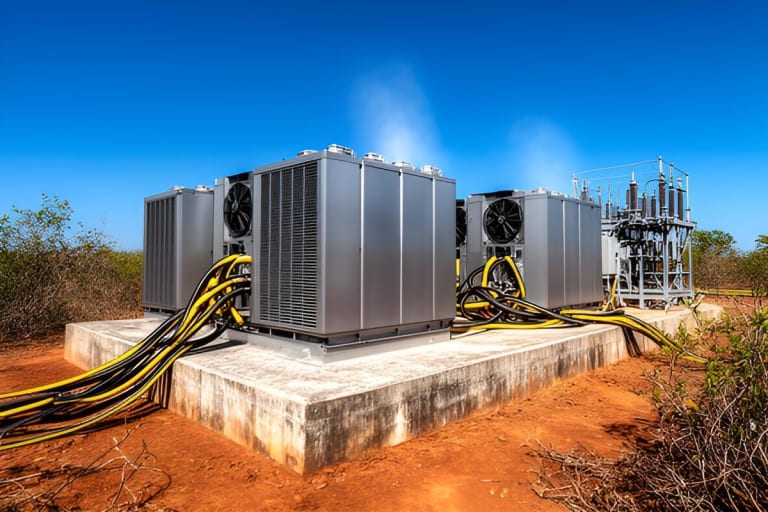
One of the most notable highlights is the forecast for deploying a Battery Energy Storage System (BESS) in the state of Acre. With an estimated investment of R$ 249 million, this initiative aims to strengthen the security and stability of the electricity supply for the cities of Cruzeiro do Sul and Feijó. The integration of Cruzeiro do Sul into the National Interconnected System (SIN) only at the end of 2024 underscores the importance of this new infrastructure to guarantee continuous and efficient service.
Major Projects Boost the National Interconnected System
The POTEE 2026 is not limited to the North region. The plan covers a total of 45 new transmission grid expansion projects distributed across 17 states in all five regions of the country, with implementation scheduled through 2033. In addition to Acre, the document outlines the installation of two transmission lines with a combined investment of R$ 717 million.
A major project requiring substantial resources is the set of installations associated with the Northeast Bipole II. With investment needs exceeding R$ 24 billion and an estimated completion date of January 2033, this project is crucial for expanding the export capacity of energy generated in the Northeast region while simultaneously optimizing the import of energy from the South.
Optimization and Technology for Operational Efficiency
Technological innovation is also featured in the plan. In São Paulo, the Mogi Guaçu I – São João da Boa Vista II transmission line will receive a system to calculate its transmission capacity in real time, taking environmental and operational conditions into account.
This technological solution represents a crucial advancement in managing our grid. By enabling dynamic monitoring of the line’s capacity, we can optimize its use and, most importantly, postpone the need for a reconstruction that would cost around R$ 140 million, with an initial investment of just R$ 2.1 million.
This smart approach not only delivers substantial savings but also demonstrates a commitment to efficiency and sustainability in the operation of the electrical system.
The implementation of these new structures and technologies contained in the POTEE 2026 signals a more robust and reliable energy future for Brazil. The addition of energy storage systems, the expansion of transmission lines, and the adoption of innovative solutions for grid monitoring and management are essential steps to meet growing demand, integrate renewable sources, and ensure energy security nationwide.