Unicamp researchers create an unprecedented cylindrical flow battery that promises to lower costs, simplify operations, and increase the safety of solar and wind energy storage in Brazil.
The expansion of renewable energy sources faces the constant challenge of weather intermittency. To ensure a reliable power supply even without sun or wind, efficient large-scale electricity storage has become essential.
Addressing this demand, the University of Campinas (Unicamp) has developed an innovative flow battery architecture designed to raise safety standards and reduce operating costs in the sector.
Designed within the BREnergies research group at the Faculty of Electrical and Computer Engineering (FEEC), this domestic technology makes sustainable storage viable and supports the global energy transition.
Cylindrical innovation and the end of leaks
Traditional flow batteries often fail due to leaks in external pumping systems and short circuits caused by dendrites. The solution created by engineer João Pedro Aguiar dos Santos reconfigures this structure.
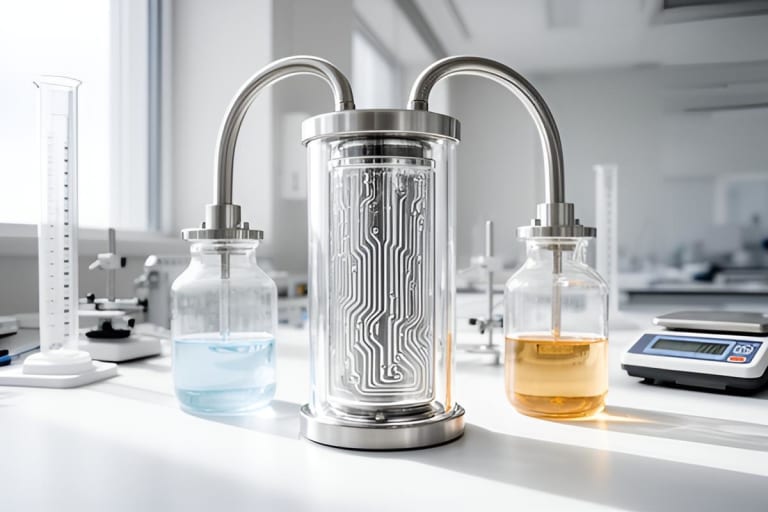
The new model adopts a cylindrical format with concentric ring electrodes. A small internal turbine circulates the liquid, completely eliminating external hoses and pumps that frequently break down.
During his doctorate, under the supervision of César Pagan and co-supervision of Hudson Zanin, the researcher had to design the equipment from scratch, resulting in a patent application filed with the Brazilian National Institute of Industrial Property (INPI).
During my studies, I realized that there was no existing design or experimental setup available for purchase to assemble the battery. That was a major challenge because we had to build everything from the cells to larger reactors to conduct laboratory experiments.
High efficiency and domestic inputs
In laboratory tests, the battery achieved 400 charge cycles without additives, surpassing the 100-cycle average of similar models. Expectations are to exceed 3,000 cycles after mechanical adjustments.
The device demonstrated approximately 82% energy efficiency and 98% charge efficiency. The system maintains its performance for up to 20 years simply by replacing the electrolyte.
The structure utilizes domestic components such as graphite, aqueous electrolytes, and methanesulfonic acid (MSA), a biodegradable input. The chemistry leverages Brazil’s lead recycling network, which recovers more than 98% of the metal.
Smart monitoring and grid applications
The project includes a dedicated circuit board and software to monitor variables such as pH, temperature, and conductivity. An endoscopic micro-camera inspects the interior to prevent the formation of unwanted metallic structures.
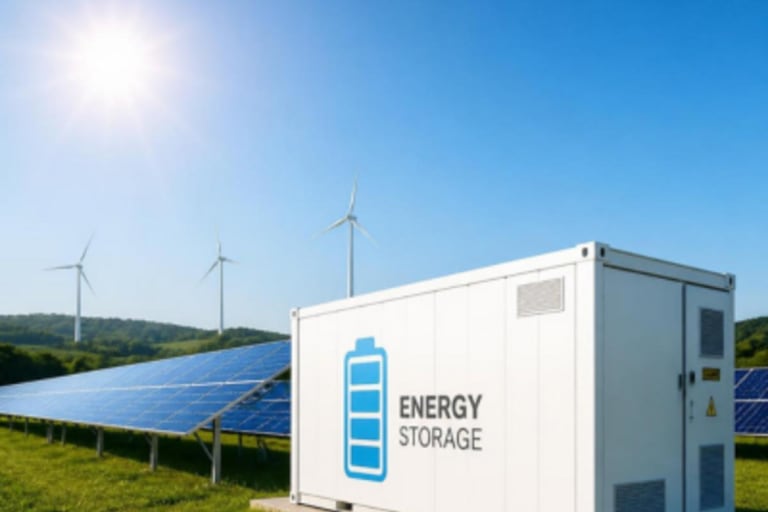
The invention is tailored for stationary BESS (Battery Energy Storage System) applications, making it ideal for integrating wind and solar power plants or replacing diesel generators in off-grid systems, thereby reducing curtailment losses.
While the prototype is not intended for electric vehicles, it aims to strengthen the national power grid and support capacity reserve auctions in the energy market.
With strong potential to optimize the country’s electrical system, this innovation represents a strategic advancement toward technological independence in sustainable solutions.
To bring the technology to the consumer market, the Inova Unicamp Innovation Agency is managing the licensing process with companies interested in scaling up industrial production.