The consolidation of solar energy demands efficient solutions for panel disposal. Material reuse and reverse logistics are taking center stage in the sustainable sector.
The expansion of solar energy has established itself as one of the fundamental pillars of the global energy transition in recent years. A growing number of residences, industries, and rural businesses are adopting photovoltaic systems to reduce costs and cut carbon emissions.
However, the sector’s accelerated growth brings a crucial debate to the forefront: the proper disposal of equipment after the end of its useful life. Contrary to popular belief, the modules do not have infinite durability and require post-use management.
Generally, solar panels come with performance warranties ranging from 25 to 30 years. After this period, although they continue to operate, the gradual loss of efficiency usually makes replacement an economically attractive choice.
The life cycle and disposal challenges
In addition to natural wear and tear, unforeseen events during transport, extreme weather, operational failures, and technological upgrades can accelerate the replacement of panels. This scenario creates the need for structured environmental planning.
The improper disposal of photovoltaic modules in landfills represents a serious waste of valuable raw materials. When discarded without control, they fail to feed new industrial cycles and generate unnecessary volumes of waste.
Recycling and the circular economy in the photovoltaic sector
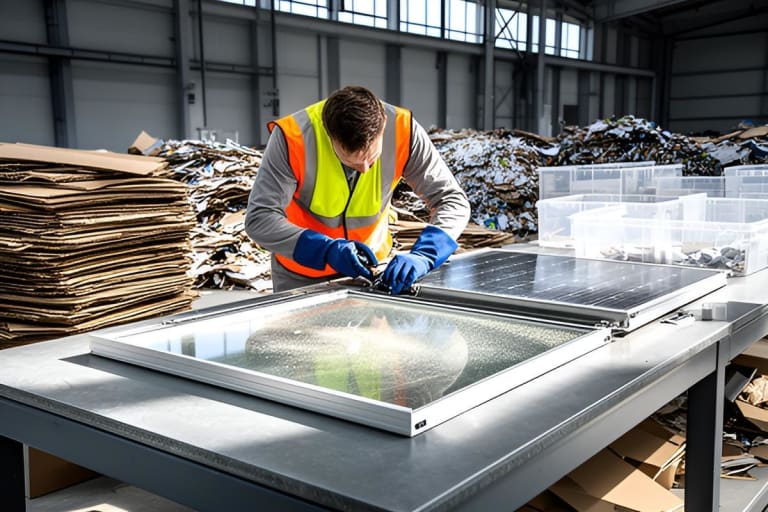
The good news is that most of a panel’s components have a very high recovery potential. Raw materials such as glass, aluminum, copper, silver, and silicon can be reintroduced into the market through specific technological processes.
The sustainability of photovoltaic energy will only be complete when environmental stewardship encompasses the entire life cycle of the equipment, from the start of production to responsible disposal.
The sustainability of photovoltaic energy will only be complete when environmental stewardship encompasses the entire life cycle of the equipment, from the start of production to responsible disposal.
In addition to recycling, reintroduction into a circular economy emerges as a viable alternative. Equipment replaced prematurely that still maintains good generation capacity can serve smaller demands, such as local public lighting, small properties, or community projects.
Brazil’s strategic opportunity
Having experienced a massive adoption of the solar source predominantly over the past decade, Brazil has a favorable time window. The volume of equipment reaching the end of its useful life is still low nationwide.
This scenario allows the country to establish efficient regulations, encourage reverse logistics, and train the market before the volume of waste reaches high peaks.
Overcoming the challenges associated with solar waste depends on combating misinformation and expanding collection infrastructure. Technically, the reprocessing of these materials is already viable.
Ensuring that clean energy technology remains sustainable until the end of its productive cycle will further strengthen the credibility of the renewable matrix in the future.