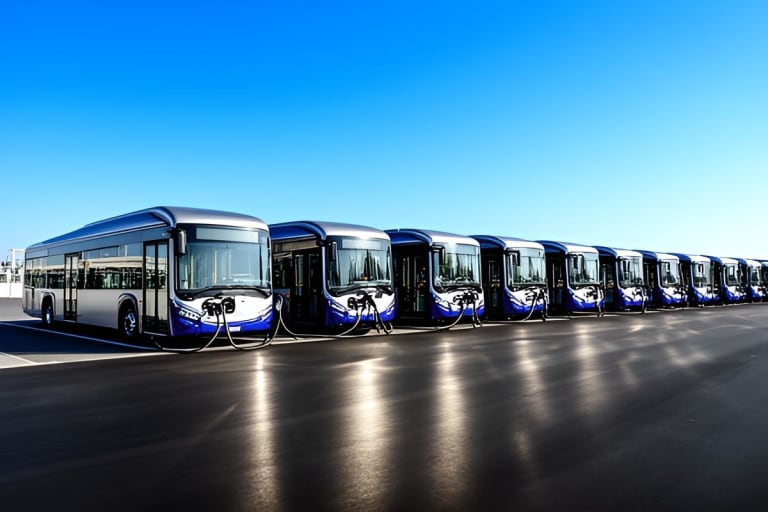
Brazil’s largest city is expanding its sustainable fleet with the arrival of 250 new electric buses, enabled by robust financing from BNDES focused on urban transport decarbonization.
The city of São Paulo has taken a decisive step in its energy transition journey by integrating another 250 electric-powered buses into its public transit network. The operation, backed by the Brazilian Development Bank (BNDES), is part of an ambitious plan that has already financed nearly 1,200 low-emission vehicles in the metropolis.
With a total investment of R$ 2.485 billion, this initiative stands as the largest sustainable mobility financing action ever undertaken in Brazil. The primary objective is to gradually replace traditional diesel buses with zero-emission models, aligning São Paulo’s public transit operations with global climate goals.
Commitment to the environment
The environmental impact of this shift is significant. Technical projections indicate that the new fleet will prevent the release of more than 85,000 tons of CO₂ into the atmosphere annually. This effort is essential for the capital to meet the targets set by the municipality’s Climate Change Policy, which calls for a 50% cut in emissions by 2028 and total neutrality by 2038.
Luciana Costa, Managing Director of Infrastructure, Energy Transition, and Climate Change at BNDES, stated:
Fleet electrification projects help improve the quality of public transport and advance the sustainability agenda in major cities.
National leadership in electromobility
Currently, São Paulo holds undisputed leadership in the electrified public transport sector, accounting for over 80% of all electric buses operating across Brazil. This progress has not happened all at once, but rather through successive delivery phases that cement the capital’s role as a living laboratory for sustainable solutions.
The city’s logistics system, which daily transports roughly 7.3 million passengers using a fleet of 13,000 vehicles, demands constant technological renewal. The BNDES investment not only finances the vehicles but also boosts the domestic manufacturing supply chain, setting a new standard of efficiency and modernity for rubber-tired transit in Brazilian metropolises.