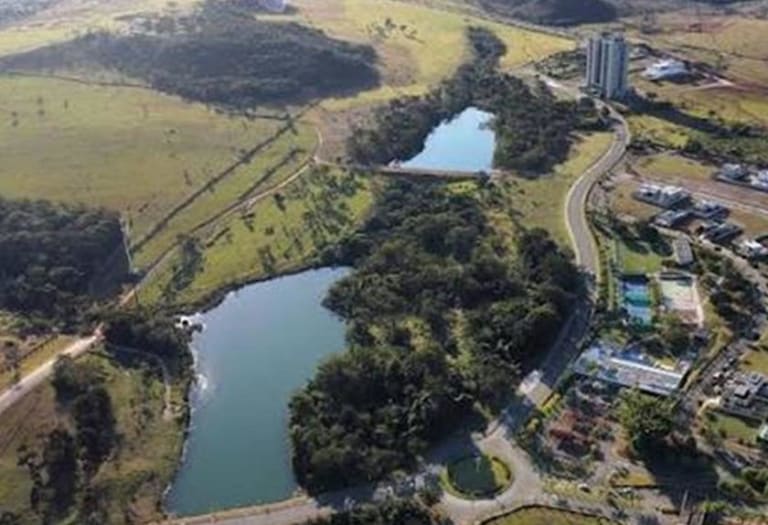
With 53 years of history, Grupo Alphaville celebrates more than 108 million square meters urbanized, consolidating its pioneering role in Brazilian sustainable urbanism and reinforcing its commitment to environmental integration in its planned communities.
Over more than half a century, Grupo Alphaville has established itself as one of the major pillars of urban development in Brazil, recently celebrating 53 years of a trajectory marked by expansion and innovation. Since its founding in 1973, in the vibrant Barueri (SP), the company has been instrumental in creating spaces that transcend simple housing, investing in planned communities that reflect a growing commitment to quality of life and sustainability.
The company’s relevance is not only measured by its longevity but by the scale of its operations, which today spans 72 municipalities across 23 states and the Federal District. One of the most significant aspects of this journey is the vast urbanized area, exceeding 108 million square meters, demonstrating a strategic vision focused on long-term projects and the construction of integrated communities.
Growth and Diversification in the National Landscape
The history of Grupo Alphaville is marked by notable expansion, culminating in the delivery of 150 developments and the sale of approximately 80,000 lots nationwide. This massive reach reflects a unique ability to adapt and identify with the needs of the Brazilian real estate market.
From 2019, the group demonstrated strategic agility by diversifying its operations with the introduction of the Terras Alpha brand. This initiative resulted in the launch of 45 new projects, totaling more than 40 new developments in the recent period, further strengthening its presence and consolidating its portfolio. The approach is not limited to land sales but encompasses a complex range of interventions in urban infrastructure, always with an eye on harmony with the environment.
Commitment to Sustainability and the Environment
Grupo Alphaville‘s focus on planned communities goes beyond aesthetics, incorporating principles of environmental integration that resonate with the ideals of a greener future. The company has been recognized for its sustainable practices, earning prestigious certifications such as the Selo Verde and Bandeira Azul, which attest to its rigorous monitoring and protection of natural resources. This alignment with sustainability is vital for readers interested in the clean energy and sustainable development sectors, as conscious urbanization reduces environmental impact and promotes more resilient communities.
The urban developer’s CEO, Klausner Monteiro, reiterates the company’s forward-looking vision:
“Our 53-year journey is a testament to innovation and commitment to the future of urbanism in Brazil. We will continue to plan new launches, always guided by excellence in infrastructure and responsible integration with the environment, crucial elements for building truly sustainable communities.”
In celebration of the date, the group launched a documentary that explores the evolution of urbanism in the country, highlighting its contribution to this landscape.
Impact and Future Prospects
Grupo Alphaville‘s 53-year milestone represents not only a mark of longevity but a legacy of profound impact on the social and urban fabric of Brazil. The continuous investment in planned communities with strong environmental integration positions the company as a fundamental player in the national sustainability agenda.
With new launches in sight, the expectation is that Grupo Alphaville will continue to influence the real estate development landscape, driving practices that reconcile economic growth with environmental preservation and the promotion of a better quality of life for future generations. Its trajectory serves as a model for building a more balanced and conscious urban future, where urbanism goes hand in hand with sustainability.