
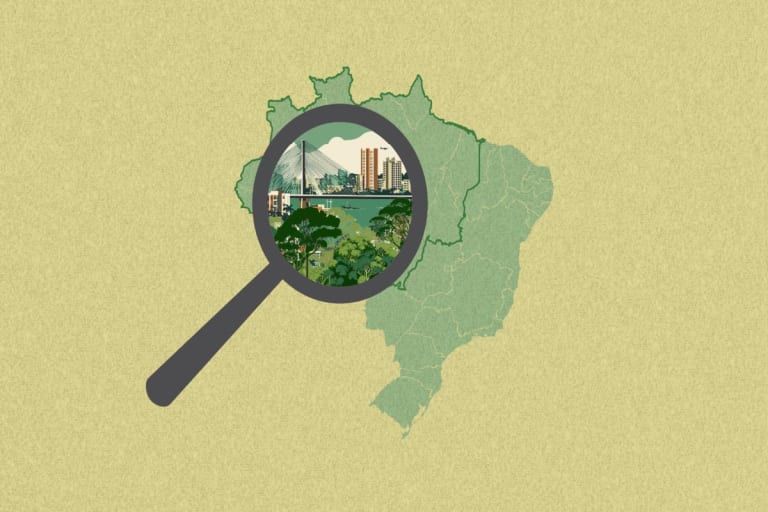
A new study reveals a roadmap for sustainable development in the Amazon, suggesting strategic redirection of public resources. The proposal aims to boost the bioeconomy, infrastructure, and productivity, combining economic and social progress with vital forest conservation.
The Legal Amazon, a vast territory crucial for global environmental balance, has received billions of reais in public funds, sourced from banks, funds, and tax incentives. However, a significant portion of these investments still targets low-productivity, short-term activities, contributing to the expansion of the agricultural frontier and negatively impacting the forest. A new, comprehensive study, a collaboration between the Climate Policy Initiative/PUC-Rio (CPI/PUC-Rio) and the Amazon 2030 project, proposes a radical shift in this model.
The research advocates for a strategic redirection of these financial flows. The objective is to channel public resources into initiatives that effectively combine economic development and improved social conditions with fundamental forest conservation, paving the way for a more sustainable future for the region.
The Challenge of Current Funding
The Constitutional Fund for Financing of the North (FNO), a cornerstone of the regional development policy for the Amazon, disbursed over R$ 70 billion between 2020 and 2025. Despite the volume, its current criteria are ineffective in directing capital toward small producers, credit-scarce regions, or genuinely sustainable activities. Alarmingly, data reveals that between 2020 and 2024, 36% of subsidized rural credit benefited properties associated with deforestation after 2009. At the Bank of the Amazon (Basa), this figure exceeds 70%.
These findings are detailed in the report “Amazon in Focus: How to Redirect Public Resources for the Region’s Sustainable Development”, authored by Juliano Assunção, Paulo Barreto, Salo Coslovsky, Beto Veríssimo, and Manuele Lima. The study criticizes current financing instruments and economic incentives, proposing modifications to boost productivity, restore degraded areas, strengthen the forest-based bioeconomy, and improve the region’s socioeconomic conditions.
To download the full study – click here.
New Guidelines for Credit and FNO
Among the crucial recommendations is the need to restrict access to subsidized credit for producers involved in deforestation. For livestock farming, it is proposed to condition financing on the adoption of technical assistance, restoration of degraded areas, and traceability guarantees, concentrating credit in already consolidated areas near slaughterhouses. Regarding the FNO, researchers advocate for revising selection criteria to prioritize smaller producers and expand credit lines for more sustainable activities, such as FNO-ABC, focused on low-carbon agriculture.
The discussion on Amazon development should not be limited to the State’s presence. Although public banks, constitutional funds, subsidized credit, and tax incentives already mobilize significant sums, some of these instruments still foster an outdated model. This model relies on frontier expansion, low-productivity activities, and investments with limited impact on territorial governance and long-term development.
The Cost of Inaction: Alarming Indicators
The urgency of reassessing the development strategy in the Amazon is highlighted by concerning economic, social, and environmental indicators. In 2024, the Legal Amazon accounted for only 9% of Brazil’s Gross Domestic Product (GDP) but contributed approximately 44% of national greenhouse gas emissions, largely due to deforestation and fires. Concurrently, the region’s approximately 28 million inhabitants face income, infrastructure, and labor market indices below the national average.
In 2025, for instance, the poverty rate in the Amazon reached 37%, compared to 23% in the rest of the country, while informality stood at 47%, versus 39%. The region’s real per capita GDP, R$ 39,000 in 2023, was significantly below Brazil’s R$ 56,000 for the rest of the country. This data reinforces the authors’ thesis: the volume of policies and public resources allocated to the region has been insufficient to mitigate profound development disparities.
The Forest as an Economic Foundation
The study underscores the strategic role of forest conservation in the Brazilian economy. The environmental services provided by the Amazon are crucial, sustaining productive activities both within and outside the region. The forest’s evapotranspiration generates the “flying rivers,” essential for rainfall patterns in agricultural areas, hydroelectric reservoirs, urban water supply systems, and waterways. Its maintenance is vital for clean energy generation.
The economic impacts of this interdependence are measurable. The “flying rivers” influence 17 of Brazil’s 20 largest hydroelectric plants, with facilities like Itaipu and Belo Monte losing about 3,700 GWh of generation potential annually. In agriculture and livestock, water scarcity caused estimated losses of R$ 186 billion in agriculture and R$ 64 billion in livestock between 2013 and 2022, highlighting the vulnerability of a sector where only 13% of Brazil’s agricultural land is irrigated.
Sustainable Production and Bioeconomy
In the agricultural and livestock sector, the report recommends that public resources be prioritized to increase productivity in already cleared areas, restore degraded lands, and expand traceability. This approach aims to discourage production expansion into new forest areas. Since 1975, approximately 86 million hectares of forest have been lost in the Amazon, and much of this land is currently degraded, abandoned, or underutilized.
The study also points to vast opportunities in the production of forest-compatible goods, such as açaí, cocoa, Brazil nuts, black pepper, fish, and tropical fruits. The international market for these products generates nearly US$ 288 billion annually, but the Brazilian Amazon captures less than 0.3% of this value. This indicates enormous potential for policies focused on productivity, innovation, commercial promotion, and strengthening value chains linked to the bioeconomy.
Tax Incentives and Legacy Royalties
The analysis delves into the Manaus Free Trade Zone (ZFM), suggesting greater integration of tax incentives with the regional economy. With the model’s extension until 2073, the authors recommend linking benefits to skilled job creation, vocational training, infrastructure, bioeconomy development, technology, and specialized services. They also propose establishing counter-commitments related to productivity and the inclusion of local suppliers, ensuring a more lasting and beneficial impact.
In mining, the recommendation is to use royalties to fund investments that will endure in municipalities after mineral resources are depleted. In 2025, the Financial Compensation for Mineral Exploration (CFEM) collected approximately R$ 3.4 billion in the Legal Amazon, with over 92% concentrated in Pará. The study proposes prioritizing infrastructure, health, education, long-term planning, and economic diversification, reducing local economies’ dependence on mining activities.
Conclusion: A Sustainable Future for the Amazon
The study concludes that Brazil already possesses the necessary financial and institutional instruments to catalyze a significant change in the Amazon’s development trajectory. The central proposal is clear: redirect public banks, constitutional funds, credit, and tax incentives towards more productive activities in already cleared areas, focusing on restoration, agroforestry, and the forest-based bioeconomy. These measures should be combined with strategic investments in urban infrastructure, workforce training, and territorial security.
For the authors, reducing deforestation is a primary condition, but it must be complemented by a robust economic strategy. This strategy needs to be capable of transforming cleared areas, the remaining forest, and the regional workforce into sources of productivity, income, and employment. This way, it will be possible to harmonize economic development, improved social conditions, and essential environmental conservation for the Amazon, paving the way for a future with more clean energy and sustainability.