Security is emerging as a strategic pillar for solar power plants, safeguarding assets and ensuring operational continuity. The Sol do Agreste plant in Pernambuco exemplifies this new approach with an integrated and innovative architecture.
The robust expansion of solar energy generation in Brazil, a sector in full ascent, brings with it new and complex challenges. Protecting assets and ensuring operational continuity across vast photovoltaic park areas requires increasingly sophisticated and integrated security solutions. In response to this need, the company Avantia has developed and implemented a cutting-edge security system for the Sol do Agreste Plant, a project by Atiaia Renováveis in the heart of Pernambuco.
This pioneering project, which began in March 2025 and was completed earlier this year, marks a qualitative leap in protecting clean energy infrastructure. The solution implemented at the Sol do Agreste Plant goes beyond traditional surveillance, establishing a security architecture that ranges from intrusion detection to event response, with the goal of safeguarding one of the largest photovoltaic complexes in the country.
Integrated Solutions for a Solar Giant
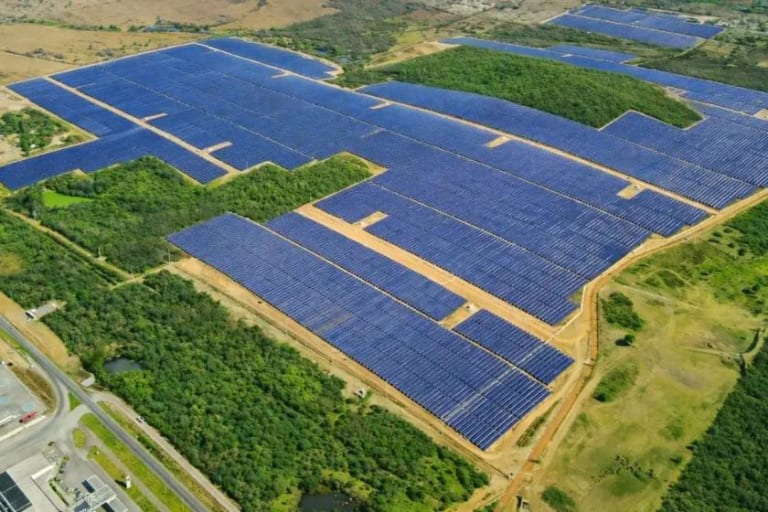
The Sol do Agreste Photovoltaic Complex, with its impressive 4,400,000 square meters—an area equivalent to more than 600 official soccer fields—presents a challenging scenario for security. The vast territory and the distribution of equipment require an approach that goes beyond installing standard cameras. Avantia focused on implementing an intrusion detection system that is robust, efficient, and economically viable for the reality of a solar plant.
The choice of solution sought to meet Atiaia Renováveis’ need for a system capable of proactively identifying potential breaches, especially in an environment with low human presence and a large amount of valuable, dispersed assets. Electronic security thus takes on a strategic role, supporting protection teams and ensuring that plant operations remain uninterrupted.
A Layered Security Architecture
Avantia’s approach for the Sol do Agreste Plant is based on an integrated security architecture, designed in layers to offer comprehensive protection. “In solar parks, factors such as territorial extent, location, topography, distance between equipment, and approach areas must be considered when scaling protection. Therefore, the strategy should not be limited to installing equipment, but rather encompass an architecture capable of supporting detection and incident response,” explains Mário Tranche, Commercial Director for the Private Sector at Avantia.
The first line of defense is perimeter protection, which uses various technologies to fence off assets and generate initial alerts in the event of tampering attempts. Following this, the visualization layer employs fixed, PTZ, and—when necessary—thermal cameras, which are ideal for monitoring in low-light conditions or over long distances, expanding detection capabilities.
Complementary sensors, such as radar, work in integration with the cameras and are crucial in remote areas or those with rugged terrain. The complete architecture also includes access control, vehicle identification, strategic lighting, communication systems, and robust network infrastructure. This integration is what distinguishes an intelligent security system, where every component works in tandem.
“The core point is that all these technologies must be connected to a layer of intelligence and operation. An isolated camera only records an event. An integrated architecture, however, is capable of detecting an incident, classifying it, generating an alert, and, based on that information, initiating a response protocol,” adds Mário Tranche.
For Thiago Breno Silva, Photovoltaic Projects, Engineering, and Construction Coordinator at Atiaia Renováveis, the implementation was fundamental to strengthening security and monitoring. “The experience at the Sol do Agreste plant reinforces a trend that is gaining importance as the solar sector grows in the country: incorporating security into the very engineering of the projects.”
The Financial and Operational Impact of Incidents
The robustness of the security system implemented at the Sol do Agreste Plant is even more crucial when considering the financial and operational impact of potential incidents. Cable theft, for instance, does not just represent a direct asset loss; it incurs costs for replacement, team mobilization, interrupted energy generation, and system downtime.
An incident, even if it seems localized, can compromise a significant amount of equipment, requiring complex technical and electrical interventions that prolong downtime. “There are also indirect effects, such as increased maintenance costs, potential impacts on insurance, additional mobilization of security and Operations and Maintenance (O&M) teams, as well as secondary risks of electrical failures and damage to other plant components. The main impact, however, lies in the loss of revenue during the period in which the equipment remains unavailable,” points out Mário Tranche.
Betting on a complete and integrated security architecture, like the one developed by Avantia for Sol do Agreste, is therefore a strategic investment. It not only protects assets but also ensures the energy efficiency and profitability of solar energy projects, an increasingly important pillar in the Brazilian energy matrix.