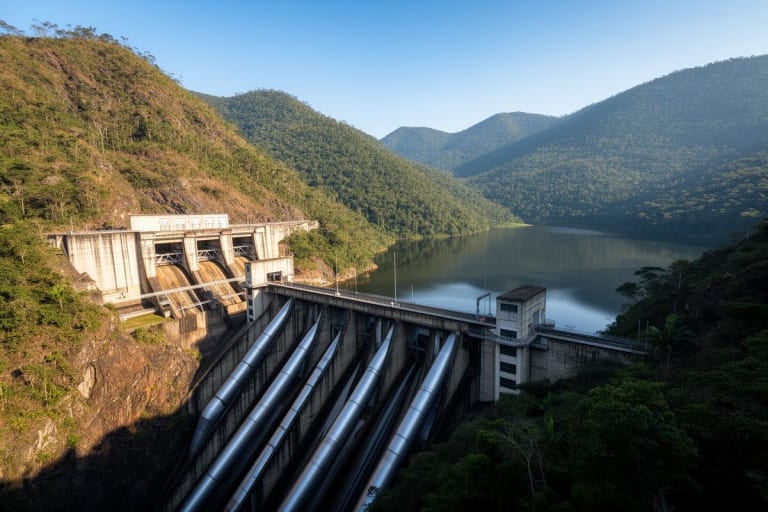
The EPE (Energy Research Office) is initiating a strategic mapping of pumped-storage hydroelectric plants in Brazil to support the planning of new energy storage auctions and strengthen the SIN (National Interconnected System).
The Energy Research Office (EPE) is preparing the ground for a new contracting model in the Brazilian electricity sector. In a move aligned with the flexibility demands of the National Interconnected System (SIN), the agency has announced it will conduct a detailed survey of the current landscape of pumped-storage hydroelectric projects across the country.
The process will begin in October with the release of registration guidelines, followed by the opening of a technical call in November. The primary goal is to gather precise data to help the government design an efficient contracting model, although this initiative does not currently represent a formal qualification for competitive bidding processes.
Understanding the role of pumped-storage plants
The strategy directly addresses the requirements of Resolution 8/2026, issued by the National Energy Policy Council (CNPE). The focus is to determine whether the volume of projects under development in the country is sufficient to justify organizing specific auctions for hydraulic storage.
For EPE president Thiago Prado, this phase is essential for market maturity.
“The call for projects is a fundamental step in understanding, within the scope of sectoral energy planning, whether the volume of projects currently under development in the country aligns with the growing demand for the National Interconnected System—as outlined in EPE’s development plans—to justify a decision by the granting authority to hold a competitive process for contracting this resource.
What we are presenting to society today is another set of concrete actions in the development of the energy storage market.”
How the survey will work
The mapping will be divided into three fundamental pillars. First, EPE will assess the maturity stage of each project, considering engineering studies, permitting status, and land viability.
Next, technical characteristics—such as power capacity, storage, and grid integration—will be cataloged. Finally, the agency seeks to understand operational and capital costs, as well as critical milestones for project viability.
The data collection process will also involve constant dialogue with the Ministry of Mines and Energy (MME) and Aneel (Brazilian Electricity Regulatory Agency). The goal is to create robust technical requirements and define economic and financial criteria that provide legal certainty and attractiveness for future auctions,
while ensuring compliance with socio-environmental requirements, as these projects may qualify for Special Environmental Licensing (LAE).
The outcome of this initiative could be decisive for the stability of the electric system in the coming years, as the increasing penetration of intermittent renewable sources requires storage solutions that allow for energy dispatch during peak times, thereby reinforcing the country’s energy security.