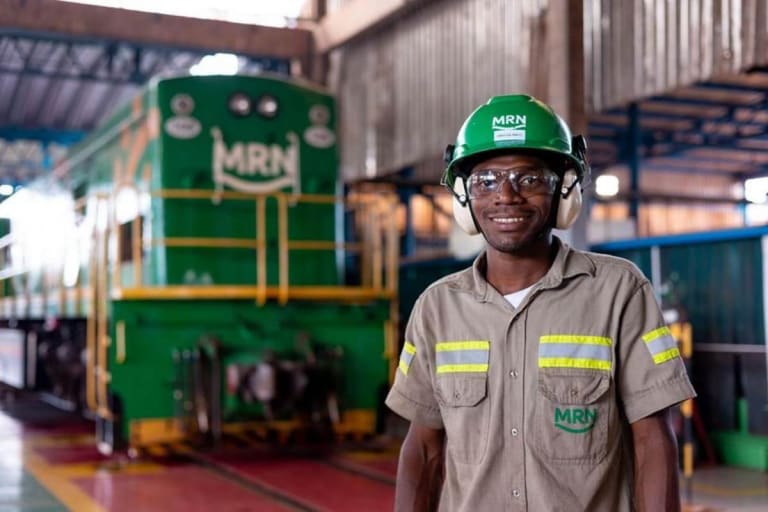
Mineração Rio do Norte (MRN) is driving the future with R$ 5 billion in investments, ensuring operational sustainability and taking a decisive step toward energy transition in Pará.
Mineração Rio do Norte (MRN) has taken a significant stride into the future by commencing the implementation of the Novas Minas Project (PNM). This ambitious undertaking involves a massive investment of R$ 5 billion over the next five years, aiming to secure the continuity of its operations in Western Pará until 2041. Concurrently, the company is advancing on another crucial front: the construction of a transmission line that will connect its operation to the National Interconnected System, a milestone for the sustainability of the sector.
The first half of 2026 already demonstrates MRN’s commitment to regional development and environmental preservation, with R$ 36.9 million invested in community and environmental initiatives. These figures and the progress of strategic projects are the focus of the 4th edition of “Por Dentro da MRN” (Inside MRN), a publication detailing the company’s economic, social, and environmental performance.
Novas Minas Project: A Secured Future and Regional Opportunities
With the Installation License granted in April of this year, the Novas Minas Project (PNM) enters its implementation phase, expecting to generate 2,300 new direct jobs during construction. The PNM not only expands mining areas in Oriximiná, Terra Santa, and Faro but also strengthens the local economy by prioritizing regional professionals and suppliers.
“The Novas Minas Project connects production, employment, regional development, and industrial competitiveness. The benefits begin in the territory, but their effects reach the entire aluminum chain and various sectors of the country’s economy,” states MRN CEO, Guido Germani. This project represents a fundamental pillar for MRN’s longevity and sustainable growth in Pará.
To capitalize on the opportunities generated by the PNM, MRN invested in qualifying local labor, offering 1,200 free spots in 14 vocational courses. Areas such as civil construction, machinery operation, welding, and maintenance were included, preparing local residents for future challenges and demands.
“Job creation depends on qualifying people and strengthening the local capacity to meet future demands,” highlights HR General Manager, Magda Damasceno.
Transmission Line: Energy Transition Underway
The strategic 230 kV transmission line project, which will connect MRN’s operation to the National Interconnected System, reached 63% physical progress in August. One of the most challenging stages, the crossing of the Trombetas River with five towers, has already been completed. With 98 kilometers in length and 232 towers, the work is scheduled for operation in the first quarter of 2027 and promises a 90% reduction in greenhouse gas emissions related to energy generation.
“We overcame technical, environmental, and occupational challenges while fully meeting the project’s conditions. This result reinforces our confidence for the next implementation stages,” states Yanto Araújo, MRN’s General Manager of Projects.
The construction generated 1,100 jobs, with 67% filled by workers from Pará, demonstrating MRN’s commitment to the state’s development.
Economic and Social Impact in Pará
The results from the first half of 2026 presented in the publication highlight MRN’s strong connection with Pará’s economy. The company produced 5.5 million tons of bauxite and invested R$ 470.2 million. Purchases of materials and services in Pará totaled R$ 448.3 million, in addition to over R$ 200.1 million collected in taxes and fees. MRN maintained 7,711 workers, with 85.61% of its permanent employees being from Pará.
The company also strengthens the local supply chain through meetings with commercial associations and businesspeople from various cities in the state, encouraging the participation of local companies in its operations.
Socio-Environmental Investment and Ecosystem Recovery
MRN’s commitment to communities and the environment is evident in the R$ 12.9 million invested in socio-environmental projects and actions during the first semester. Initiatives in education, health, income generation, and community strengthening benefited 3,700 people.
On the environmental front, R$ 24 million were allocated to ecosystem recovery programs, with the reforestation of 207.6 hectares and the planting of over 280,000 native seedlings. An innovative initiative involved the acquisition of 1.9 tons of seeds from communities such as Boa Nova and Saracá, promoting environmental conservation, valuing traditional knowledge, and generating local income.
The complete 4th edition of “Por Dentro da MRN” offers a detailed overview of these actions and results, available at: https://www.mrn.com.br/images/download/Caderno_Especial_Por_Dentro_da_MRN_4_Edicao.pdf. These projects and investments reinforce MRN’s long-term vision, aligned with sustainable development and energy transition in Pará.