
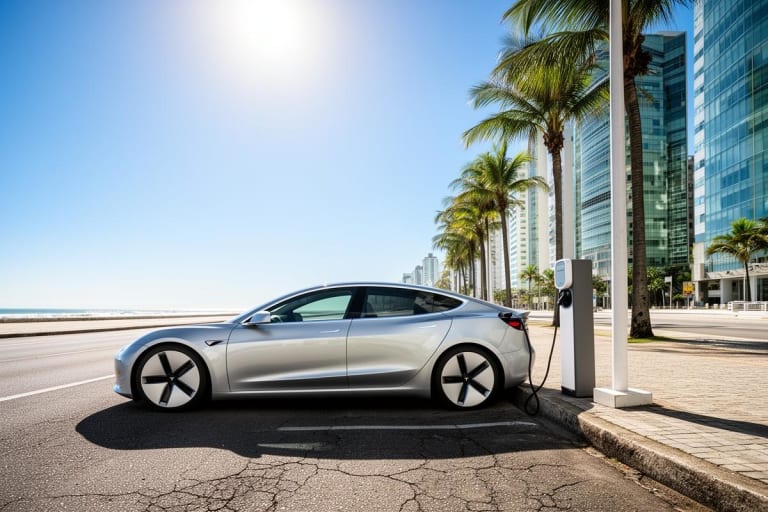
The market for electrified vehicles in Brazil’s Northeast continues to expand rapidly, reaching 21.7% of national sales in August and cementing the region as a strategic hub for electromobility in Brazil.
The energy transition in the Brazilian transport sector is taking on new dimensions following the impressive performance recorded in the Northeast. According to recent data from the Brazilian Electric Vehicle Association (ABVE), Northeastern states reaffirmed their leading role by accounting for nearly a quarter of all electrified vehicle sales nationwide throughout August 2026.
With 12,453 units sold, the Northeast secured second place in the national rankings, surpassed only by the Southeast region. This volume not only reflects a shift in local consumer habits but also signals a market that is increasingly mature and receptive to sustainable transport solutions, driven by a broader product portfolio and competitive pricing.
The rise of electromobility nationwide
The progress observed in the Northeast is a direct reflection of a phenomenon gaining traction across the country. In August, Brazil recorded a total of 63,709 new registrations for electrified vehicles, a significant leap that more than doubles the figures recorded during the same period last year.
Currently, electric and hybrid models already account for 24.3% of the light vehicle market, driven largely by the strengthening of charging infrastructure along highways and in urban areas.
The dominance of Asian automakers
The presence of Chinese manufacturers has been a decisive competitive factor for the adoption of this technology in the Northeastern market. Aggressive pricing strategies and model diversification have attracted consumers seeking more efficient alternatives to traditional combustion engines.
In the regional landscape, there is a clear preference for specific models. Regarding this market configuration, experts note that:
The dominance of brands like BYD, with the Dolphin Mini, and Geely, with the EX2, reveals how Northeastern consumers are aligned with global mobility trends, prioritizing technology and value for money.
While the BYD Dolphin Mini secured the lead in states like Bahia, Pernambuco, and Ceará, the Geely EX2 won over buyers in states such as Rio Grande do Norte and Sergipe, demonstrating remarkable regional reach.
Future outlook and infrastructure
The outlook for the coming months remains optimistic. The trend suggests that demand for electric vehicles will continue to exert positive pressure on the need for infrastructure investment.
Beyond simply selling cars, the sector is now facing the challenge of intelligently integrating electromobility into the electrical grid, connecting vehicle charging to clean energy sources, such as solar photovoltaics.
This integration opens a window of opportunity for the growth of distributed generation in the Northeast, allowing owners of electrified vehicles to leverage the region’s abundant renewable resources to optimize costs and further reduce the environmental impact of their fleets.