
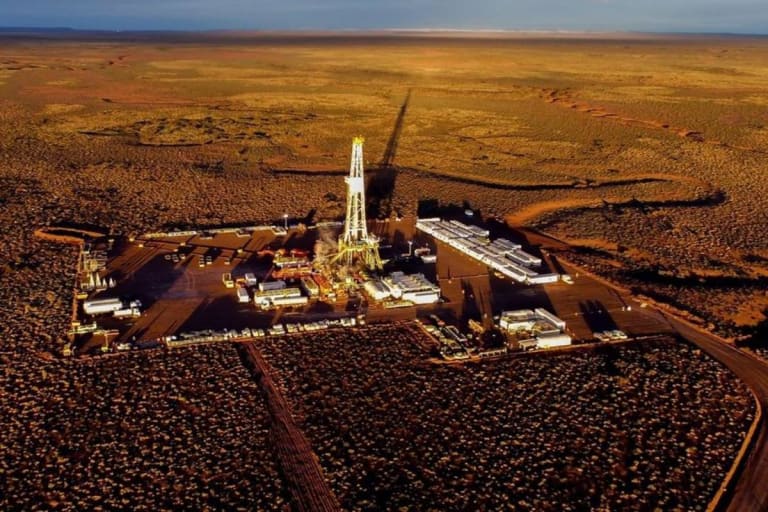
On the eve of a crucial STJ decision on fracking, presidential plans from Lula and Flávio Bolsonaro diverge. While Bolsonaro supports the technique for unconventional gas, Lula remains silent, focusing on expanding oil and gas through different approaches.
The future of fracking in Brazil has entered the presidential race, albeit in different ways. While Flávio Bolsonaro’s government plan explicitly supports allowing the exploration of unconventional gas through hydraulic fracturing, President Lula’s re-election campaign program does not mention the technique. However, this silence coexists with proposals to increase oil and gas production and strengthen natural gas in the energy matrix.
This difference gains significance on the verge of a decision that could set the limits for this activity in the country. This Wednesday, September 9th, the First Section of the Superior Court of Justice (STJ) is scheduled to hear Incident of Assumption of Competence No. 21 (IAC 21), a case discussing the exploration of unconventional oil and gas through hydraulic fracturing.
The controversy has been ongoing for over a decade and could determine whether the technique will be permitted and under what conditions, directly impacting Brazil’s energy sector and environment.
A comparison of the two programs highlights a significant political difference. On one hand, Flávio Bolsonaro explicitly takes a pro-fracking stance. On the other, Lula does not directly commit to either prohibiting or allowing it. However, both projects reserve a relevant role for hydrocarbons in Brazil’s energy policy.
Flávio Bolsonaro’s Position: Explicit Defense of Fracking
In the “Flávio Bolsonaro Government Plan Guidelines 2027-2030,” released in August, fracking appears in the chapter dedicated to energy. The document proposes a “National Energy Security Program” focused on areas such as fuel and gas refining, processing, transport, and distribution, and expresses the intention to permit the exploration of unconventional gas:
With environmental responsibility and in compliance with the law.
The proposal is accompanied by measures related to the expansion of gas infrastructure, leveraging pre-salt production, modernizing refining, and incentivizing the production of fertilizers from natural gas.
The concept guiding this policy is to achieve:
Total energy security at the lowest possible price for the consumer.
Although the reference to fracking is brief, it establishes an unequivocal position: if elected, Flávio Bolsonaro intends to pave the way politically for the exploration of unconventional gas.
However, according to the presented analysis, the program does not detail the environmental safeguards for this exploration. For instance, it does not establish specific criteria for protecting aquifers, managing wastewater, controlling substances used in the process, or protecting agricultural areas.
This omission is significant given the characteristics of Brazil’s territory. One of the areas identified as having the highest potential for unconventional resources is the Paraná Basin, a region associated with the Guarani Aquifer System and also marked by strong agricultural production.
Lula’s Plan: Silence on Fracking and Focus on Oil and Gas
In Lula’s program, the situation is different. The word “fracking” does not appear at all. For the ARAYARA International Institute, this absence warrants attention because the document details various aspects of oil and gas policy without defining a specific stance on the exploration of unconventional resources.
The program celebrates Petrobras’s increased investments and foresees the continuation of onshore and offshore exploration to expand the state-owned company’s share in national reserves. It also proposes refining expansion and views natural gas as strategic for energy security and South American integration.
At the same time, the document presents an energy transition agenda. It mentions biofuels, low-carbon hydrogen, and offshore wind energy, as well as Brazil’s goal to reduce net greenhouse gas emissions by 59% to 67% by 2035, compared to 2005 levels.
This is where one of the main differences between the two candidacies emerges. Flávio Bolsonaro states his intention to permit fracking; Lula does not say whether he intends to permit or prohibit it.
However, Lula’s plan also does not close the door on expanding gas and oil production – on the contrary, it includes increased exploration as a component of his energy strategy.
For ARAYARA, this lack of clarity leaves a gap on one of the most controversial points of energy policy. The question is whether the planned expansion of oil and gas could, in the future, also encompass unconventional reservoirs if the STJ authorizes the activity. Lula’s document does not provide a clear answer.
Fracking: Environmental Risks and International Experience
The debate surrounding hydraulic fracturing goes beyond energy policy. The technique combines horizontal drilling with the high-pressure injection of large volumes of water, sand, and additives to release oil or gas trapped in low-permeability rock formations.
Among the risks discussed in the Brazilian case are aquifer contamination, fugitive methane emissions, and induced seismicity. In IAC 21, Petrobras and the National Petroleum Agency (ANP) argue that these risks can be managed through adequate regulation.
Conversely, arguments presented in the case advocate for the application of the precautionary principle and more stringent environmental conditions.
International experience is also central to this discussion. Different jurisdictions have adopted various responses to fracking, ranging from outright bans to conditional authorization regimes. The material analyzed by ARAYARA itself cites France and New York among places that have prohibited the activity, and parts of the United States and Argentina among those that permit it under specific rules.
This difference is relevant because it prevents the discussion from being reduced simply to:
Being against or for gas.
The debate involves which risks the country is willing to accept, where the activity could take place, what studies should precede its authorization, and who would be liable for potential environmental and economic damages.
Constitutional Limits and Climate Commitments
Regardless of who wins the election, the decision on fracking will not solely depend on the next president’s political orientation. Articles 170 and 225 of the Federal Constitution place environmental protection among the limits of economic activity and mandate the public authorities to protect the environment for present and future generations.
It is within this context that the precautionary principle emerges: in the face of potential serious or irreversible damage and significant scientific uncertainties, the safety of the activity becomes a central element of the decision.
Brazil’s climate commitments are also at stake. Lula’s program, for example, reaffirms Brazil’s NDC and its emission reduction targets.
The potential opening of a new unconventional gas frontier would bring into question the compatibility of these objectives with an additional expansion of fossil fuel production, especially considering the methane emissions associated with the activity.
This is precisely why the STJ’s ruling occurs at a unique moment. Even before Brazilians choose their next government, the Court could establish legal parameters that will impact what any president can do regarding fracking.
IAC 21 could guide judicial decisions and the actions of the ANP, and define whether Brazil will adopt a more restrictive approach or open its unconventional resource frontier, possibly through environmental conditions.
In this scenario, both plans leave distinct questions for voters. In Flávio Bolsonaro’s case, the question is how he intends to permit fracking and what environmental guarantees will be required before exploration.
In Lula’s case, the question precedes that: what, after all, is his position on fracking? The STJ’s decision may answer how far legislation permits going.
But it will remain up to the candidates to explain what policy they intend to adopt within these limits—especially when water, agriculture, climate, and the future of Brazil’s energy matrix are at stake.