
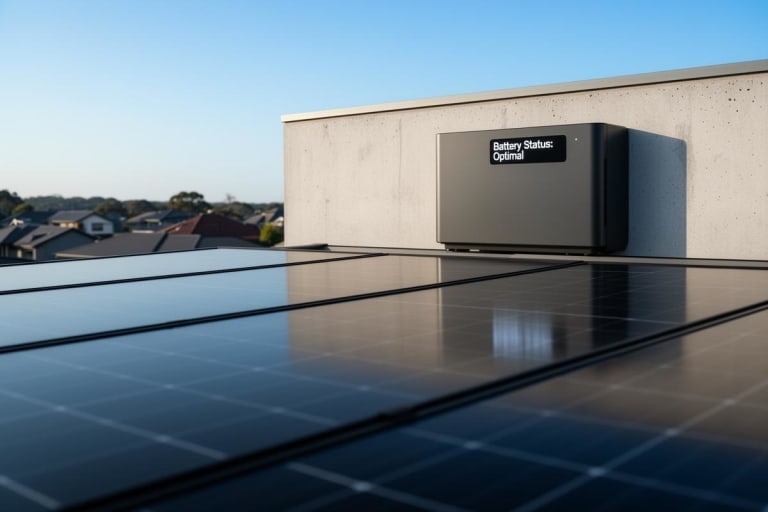
Tax reform is redefining the rules for solar energy, storage, and distributed generation, directly impacting value engineering and business operations.
The complexity of Brazilian tax reform has extended beyond fiscal and accounting realms, deeply infiltrating the strategy and economic viability of solar energy projects, energy storage systems, and distributed generation models. The shift in the tax architecture, replacing taxes like PIS, Cofins, ICMS, and ISS with CBS and IBS, mandates a complete reassessment of economic engineering, contracts, invoicing, and credit management. For an industry with investment plans spanning decades, even minor changes in the taxable base can significantly affect pricing, profit margins, and the ability to meet financial commitments.
The core of the reform lies in its ability to redefine not just tax calculations but also the mechanics of collection: who pays, when, on which part of the operation, with what credit opportunities, and which tax documents are required. This new dynamic demands meticulous preparation from companies, especially regarding the adoption of new technologies like storage batteries, which can no longer be viewed as mere add-ons. How these systems are designed and contracted – whether as standalone assets, part of larger plants, or service platforms – will dictate distinct regulatory, commercial, and tax flows, requiring adapted value engineering.
Preparation Begins with Invoices and the Regulatory Schedule
The tax reform implementation timeline sets a phased transition, with initial tests and adaptations starting in 2026. From 2027, with the new stage of the Contribution on Goods and Services (CBS) and the introduction of the Goods and Services Tax (IBS) at a reduced rate, the change will become more tangible, culminating in the full replacement of ICMS and ISS with IBS by 2033. For electricity sector companies, 2026 is not a period of inertia; it is the crucial year for testing invoicing systems, registries, credit appropriation rules, and the integration between metering and tax documentation. The mandatory Electronic Invoice for Electricity (NF3e) from August 2026 marks a turning point.
Postponing compliance to the following year represents a considerable risk, as operations will already be under the new rules, with closed contracts and defined prices. Effective preparation, therefore, involves a combination of in-depth tax review, data cleansing, rigorous system testing, and a strategic reassessment of existing and future contracts. Complementary Law No. 214/2025, by defining the new rules, aims to organize the electricity sector to apply IBS and CBS to onerous transactions with goods and services, but with specific nuances for the energy sector.
Specific Rules for Electricity and Distributed Generation
Tax legislation pays special attention to the particularities of the electricity sector. Article 28 of LC 214/2025 centralizes tax collection based on the contracting environment and the nature of the supply. This means the responsibility for tax collection varies: the distribution company acts in regulated environments, while in the free market, the responsibility generally falls on the seller. Complexity increases in multilateral operations and with consumers directly connected to the main grid, where the law details the distribution of responsibility among those involved.
This differentiation is crucial to avoid simplistic interpretations. Not every solar generator will be treated the same way under the new tax regime. The place of supply, the buyer’s profile, whether there is on-site consumption, and how the transaction is settled directly influence the applicable tax treatment. A specific exclusion from the IBS and CBS tax base is provided for energy compensated within the Electric Energy Compensation System (SCEE), referring to energy injected into the grid by the same consumer unit. However, this exclusion has limits and does not cover all invoice components, such as availability charges and connection fees, requiring clear communication to customers about the actual scope of the exclusion.
Distributed Generation: Crucial Distinctions and the Future of Credits
In the realm of distributed generation, Law No. 14.300/2022 already established important distinctions between local self-consumption, remote self-consumption, multi-unit consumer projects, and shared generation. The tax reform, by examining these models, introduces new layers of complexity. In local self-consumption, where generation and consumption occur within the same unit, the photovoltaic system can reduce the need to purchase energy but does not automatically eliminate contracted demand or other fixed costs. A detailed analysis by tariff post and load profile is essential.
Remote self-consumption requires validation of ownership, the same distribution company’s service area, and the SCEE modality. Treating energy credits as a freely transferable commodity is a common mistake to be avoided. The biggest area of concern, however, lies in shared generation. Regulations for CBS and IBS indicate that the exclusion from the tax base does not apply to consumer units participating in shared generation through consortiums, cooperatives, condominiums, or civil associations, nor to multi-unit projects. This particularity demands a sector-specific legal analysis and consideration of favorable and conservative legal scenarios, with mechanisms for tax rebalancing in contracts.
Energy Storage: A New Regulatory and Tax Frontier
The energy storage sector is also undergoing a transformation. Law No. 15.269/2025 and subsequent ANEEL regulations have established clear guidelines for the activity, including autonomous systems and those co-located with generation plants. The regulatory process for installing these systems is complex, requiring detailed legal, fiscal, and technical qualifications.
It is crucial that this regulatory process aligns with tax analysis. Even before defining the corporate structure or commercial contracts, companies must map all energy inputs and outputs and associated services for batteries. ANEEL is already planning storage auctions with long-term contracts, indicating that revenue from a storage system can come from various sources, such as availability, energy, and ancillary services. Structuring the operation to identify, measure, and document different flows, each with its specific tax treatment, is key to efficient management.
Utility Scale: Managing Risks in Regulated and Free Markets
In large-scale (utility scale) projects, the distinction between the regulated contracting environment (ACR) and the free contracting environment (ACL) becomes even more critical. In ACR, where the distribution company plays a central role, the generator may face financial risks related to the formation of credit balances and mismatches between supplier payments, revenue recognition, and credit recovery. In ACL, attention shifts to the Power Purchase Agreement (PPA) and price formation, clearly defining responsibility for legislative changes and the gross-up mechanism.
Split payment, a method of tax collection during financial settlement, adds a cash flow dimension, requiring detailed projections. However, there are opportunities in CAPEX. The reform foresees the suspension of IBS and CBS under REIDI for infrastructure works and ensures full and immediate credit upon acquisition of capital goods, benefits that require qualification and compliance with legal rules. Analysis of customs, exchange rate, and industrial variables is also essential for calculating the cost of equipment such as modules, inverters, and batteries.
Pricing and Management of Existing Assets in the Era of Reform
Pricing new projects in the era of tax reform must go beyond the mechanical application of rates. It is necessary to build a bridge between physical, commercial, and fiscal flows. A formula that considers CAPEX, OPEX, network costs, insurance, financing costs, non-recoverable taxes, compliance costs, risk reserves, and target returns is a starting point. Projecting gross prices, considering the gross-up logic and the effective transferable rate, is fundamental, as the latter varies according to the tax base, credits, and applicable tax regime.
Adopting scenarios is recommended: a base scenario with applicable benefits and a rebalancing clause; a conservative scenario with contingencies for controversial revenues and working capital reinforcement; and a regulatory improvement scenario, seeking efficiency and the application of favorable tax regimes. Governance must ensure that investment decisions consider the return’s sensitivity to each of these scenarios. For companies with operating plants, the work begins now, with the construction of a tax-regulatory inventory per asset, detailing every aspect of its operation to adapt to new realities and ensure the sustainability of the clean energy portfolio.