
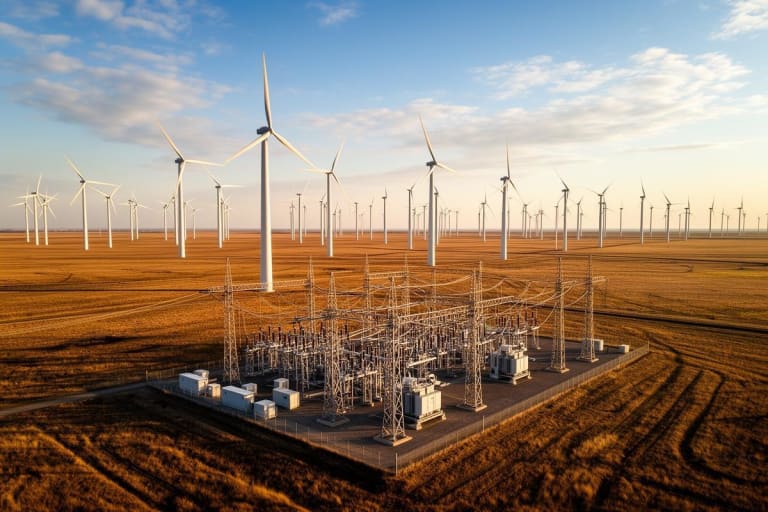
The Brazilian Association of Wind Energy and New Technologies (ABEEólica) presented a strategic plan to presidential candidates, aiming to reduce renewable energy curtailment and modernize the national electricity system by 2030.
The Brazilian Association of Wind Energy and New Technologies (ABEEólica) has placed the fight against curtailment — the forced reduction in clean energy generation — at the top of the political agenda for the upcoming presidential term.
In the document “Winds to Transform Brazil,” the entity warns that transmission grid constraints and a lack of flexibility in the National Interconnected System (SIN) jeopardize the economic viability of new wind and solar generation projects.
The main objective of the proposal is the creation of a national plan with mandatory annual targets to mitigate generation losses.
According to ABEEólica, the current scenario, marked by the rapid growth of renewable sources and structural bottlenecks, demands a coordinated response that goes beyond the simple physical expansion of transmission lines, encompassing operational improvements and the introduction of new technologies.
Technology and Regulation in Focus
One of the most critical points of the proposal is the creation of a robust regulatory framework for battery energy storage systems, known as BESS (Battery Energy Storage Systems).
For the association, it is urgent to define guidelines that recognize the value of these assets in providing ancillary services and grid support, as well as avoiding double taxation on infrastructure use, given that batteries operate as both loads and generators.
System flexibility has become the new competitive differentiator. Without clear regulation that adequately compensates storage and incentivizes demand, the country wastes cheap energy while facing operational challenges.
Integrated Planning and New Demands
The association also advocates for the institutional strengthening of the Energy Research Office (EPE) to promote a more precise mapping of the SIN‘s transmission capacities.
The logic is that generation expansion planning should go hand-in-hand with infrastructure, allowing investors to identify bottlenecks in advance and avoid allocating new projects to already saturated regions.
To balance abundant supply in certain areas, the plan suggests fostering the installation of new loads, such as data centers, in regions with a generation surplus.
The idea is to create an ecosystem where industrial demand aligns with renewable supply, integrating energy policies with industrial development goals and the advancement of low-emission hydrogen.
The next government planning cycle, between 2027 and 2030, will be crucial for consolidating these changes.
By transforming the challenge of curtailment into an opportunity for modernization, the sector seeks not only to expand installed capacity but also to ensure that generated energy reaches consumers efficiently and sustainably, aligning Brazil with the best global practices in energy transition.