
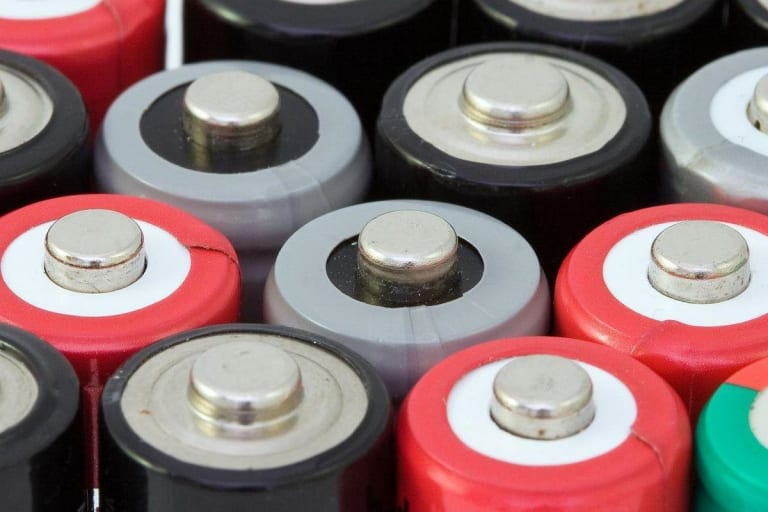
The federal government has opened a public consultation to establish nationalization targets for battery manufacturing, aiming for 61% local content in high-tech components by 2030.
The Ministry of Development, Industry, Trade and Services (MDIC) has introduced a structural proposal to strengthen Brazil’s energy supply chain. The plan establishes the so-called Basic Productive Process (PPB) for electrical accumulators, such as lithium-ion batteries, which are essential for the expansion of electric mobility and stationary storage systems.
The initiative, aimed at companies connected to the Support Program for Technological Development of the Semiconductor Industry (Padis), defines a strict schedule of requirements. The objective is to ensure that essential stages of manufacturing occur within national territory, fostering industrial sovereignty in a sector that is strategic for the global energy transition.
Scoring model and technical requirements
To organize the nationalization process, the proposal adopts a scoring system based on the complexity of the executed stages. For large-scale batteries — used in industrial, commercial, and electric traction applications — the requirement index starts at 26% initially, progressing steadily to reach 61% of the total score by 2030.
The item carrying the highest weight in the calculation is the manufacturing of the battery cells themselves, which requires complex processes such as active material mixing, deposition, sealing, and formation. Furthermore, the government places high value on local engineering for management software, known as BMS (Battery Management System).
The simple installation or updating of third-party software will not be considered a productive stage; development must be technical and result in real monitoring, safety, and operational control functionalities executed within the country.
Incentives for innovation and specific categories
To stimulate technological advancement, the text provides bonuses for companies that exceed the minimum investment targets for Research, Development, and Innovation (R&D&I). The scoring model allows manufacturers to choose which production stages to prioritize, provided they meet the thresholds established for each two-year period.
In addition to large-scale batteries, the government has drafted specific regulations for smaller systems with a nominal voltage of up to 75 Vdc. These units, frequently used in residential, telecommunications, and backup applications, also have their own schedule, scaling up nationalization to a target of 618 points by 2030.
With these new guidelines, Brazil seeks to attract investments that go beyond basic assembly, focusing on the deep integration of the value chain. The expectation is that the domestic market will become more competitive, ensuring that the growth of energy storage infrastructure creates skilled jobs and promotes internal technological development.