
Abegás is launching a strategic agenda for the 2026 elections, offering proposals to unlock infrastructure investments, enhance industrial competitiveness, and ensure energy security, while driving the transition to a low-carbon economy in Brazil.
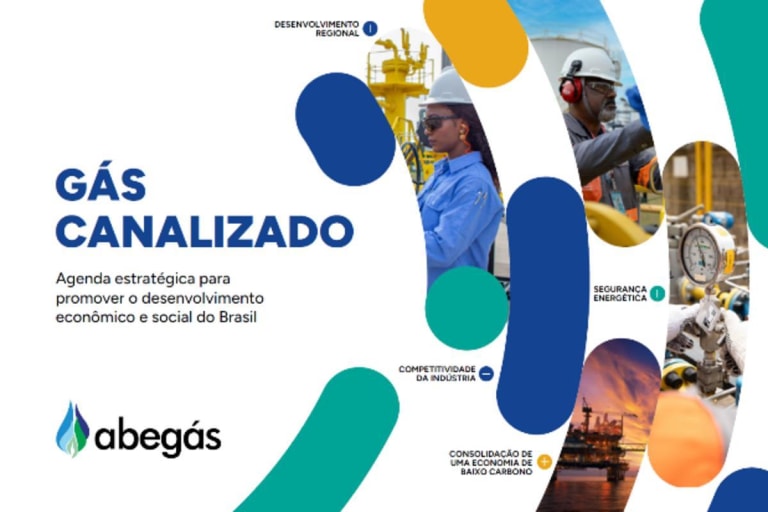
The Brazilian Association of Piped Gas Distribution Companies (Abegás) has officially released a crucial document for Brazil’s energy future: “Piped Gas – A Strategic Agenda to Promote Social and Economic Development in Brazil.” This interactive e-book, which will also be available in print, was designed to enrich the programmatic debate for Presidential and Congressional candidates in the 2026 elections.
The Abegás initiative aims to present concrete paths to boost the national economy by unlocking infrastructure investments, increasing industrial competitiveness, and ensuring the country’s energy security. Furthermore, the agenda proposes accelerating the transition to a low-carbon economy, positioning natural gas as a strategic vector in this process.
Despite possessing abundant natural gas reserves in areas such as the Pre-Salt, Sergipe Deepwater, and the Equatorial Margin, Brazil faces a structural paradox. In 2025, the country reached a record production of 179 million cubic meters of natural gas per day, yet only 33% of this volume reached the end consumer. The rest was reinjected or, in many cases, wasted. For Abegás, the 2026 election cycle represents a unique opportunity to place natural gas at the heart of the country’s development strategy.
Abegás executive director Marcelo Mendonça states:
“Our goal is to bring a positive agenda to presidential, congressional, and senate candidates, helping to shape opinion regarding natural gas and the benefits of enabling this strategy for the country. There are many challenges, but at the same time, Brazil can capitalize on a series of opportunities.
We believe our proposals in the legislative, regulatory, and public policy spheres serve as a solid contribution toward unlocking infrastructure investments, increasing the supply of competitive gas, and enabling new demand.
This agenda is an important aid for Brazil, as the sector’s development generates a decarbonization bonus, in addition to driving growth throughout the entire supply chain, creating new jobs, and increasing tax and royalty revenues for both states and the federal government.”
Mendonça adds:
“Natural gas is one of the viable and immediate routes for Brazil to meet its COP 30 environmental targets. The transportation sector accounts for approximately 50% of the country’s emissions and is highly dependent on imported diesel, which cost public coffers $9.4 billion in 2025.
By replacing diesel with gas for heavy fleets and urban buses, we drastically reduce emissions and keep that wealth circulating within our own borders, driving national development.”
The chairman of the Abegás Board of Directors, Rafael Lamastra Jr., emphasizes the sector’s relevance to the country.
“The piped gas distribution sector invests about R$ 1.5 billion per year in asset maintenance and network expansion, creating more than 60,000 direct and indirect jobs annually. This investment is vital for keeping tariffs affordable.
We need clear public policies that attract investment to transport, process, and distribute our gas, turning this abundant potential into real resources for society.
Expanding piped gas infrastructure promotes regional development in hundreds of municipalities, generating jobs and income, while also increasing tax revenue for states and the federal government, ensuring a more prosperous and sustainable future for all Brazilians.”
GET TO KNOW THE DOCUMENT
The Abegás document is structured into four essential chapters, providing an in-depth analysis of the sector:
- Chapter 1: Piped Gas Distribution in Brazil (A Regional Overview)
Presents a detailed diagnosis of Brazil’s five regions. Currently, 19 states have active piped gas operations, while five others have distributors in the pre-operational phase.
In 2025, distributors handled an average of over 58 million cubic meters per day, serving more than 5 million direct customers, including 59 thermal power plants, over 4,000 industrial sites, 52,000 commercial establishments, 1,700 gas stations, and millions of homes.
FIM PUBLICIDADE - Chapter 2: Challenges and Opportunities to Develop Brazil’s Natural Gas Sector
Addresses structural market bottlenecks, such as the lack of competitiveness in gas pricing and record levels of reinjection.
The chapter details opportunities for demand expansion, the role of gas in energy security (supporting intermittent renewable sources), and the potential for integration with biomethane to decarbonize the heavy transport sector, reducing dependence on diesel imports.
- Chapter 3: Sector Proposals (Legislative, Regulatory, and Public Policy)
Compiles the necessary measures to modernize the legal and regulatory framework, ensuring legal certainty and attracting new investments.
- Chapter 4: Annex – Understanding the Natural Gas Sector in Brazil
Provides an explanatory infographic on the entire natural gas supply chain, from production and flow to transportation, distribution, and different consumption segments.
DISCOVER ABEGÁS’ PROPOSALS
To overcome sector challenges and boost the market, Abegás has structured its proposals into three strategic pillars. Here is a summary:
1. Legislative Proposals
- Natural Gas Trading Chamber: Assign the trading of natural gas in the free market to the Electric Energy Trading Chamber (CCEE) to ensure greater transparency and governance in pricing.
- Sustainable Corridors: Establish a National Sustainable Corridors Policy to integrate gas stations along major agricultural transport routes, incentivizing the replacement of diesel in heavy fleets.
- Energy Security for Digital Infrastructure: Ensure that large data centers, which require firm and continuous energy, can utilize natural gas as an energy source.
- Exclusion of Gas Pipeline Technical Classification: Exclude Subsection VI of Article 7 of Law 14.134/2021 (New Gas Law) to preserve the constitutional authority of states to regulate local piped gas distribution services, avoiding federal conflicts and ensuring legal certainty for investments.
2. Regulatory Proposals
- Access to Essential Infrastructure: Effectuate negotiated and non-discriminatory access to gathering pipelines, Natural Gas Processing Units (UPGNs), and LNG terminals.
- Transportation Network Expansion: Conduct coordinated public calls to expand transport pipelines, moving beyond the logic of construction based solely on “guaranteed demand.”
- Optimization of Gas Reinjection: Establish technical and economic criteria to limit gas reinjection to what is strictly necessary for oil recovery, increasing supply to the domestic market.
- Independent Network Manager: Create an independent entity to coordinate the physical and commercial structure of the natural gas transport grid.
- Deconcentration Program (Gas Release): Implement compulsory auctions of gas volumes from the dominant player to foster “gas-to-gas” competition and provide liquidity to the market.
- Stimuli for Production Flow: Establish the mandatory construction of flow infrastructure for new exploration and production platforms.
3. Public Policy
- Strategic Financing for Distributors: Create credit lines linked to targets for network expansion and the universalization of access to piped gas.
- Natural Gas in the Climate Fund: Include projects that use natural gas to replace more polluting fuels (such as coal and fuel oil) in the list of projects eligible for financing by the Climate Fund, reinforcing the commitment to clean energy.
- Integration of Gas and Electric Sectors: Plan the structural dispatch of less flexible natural gas thermal power plants to ensure energy security and support the growth of intermittent renewable sources.
With this comprehensive agenda, Abegás reinforces the strategic role of natural gas as a pillar for Brazil‘s development, boosting the economy, creating jobs, and promoting a fair and efficient energy transition. The document serves as a fundamental guide for Presidential candidates and lawmakers who wish to build a more prosperous and sustainable future for the country, with a focus on clean energy and resilient infrastructure.
Document download: Link