Papo Solar episode #189 revealed how Dyness is revolutionizing energy storage in Brazil with flexible and scalable solutions for various sectors.
The clean energy landscape in Brazil is constantly evolving, with energy storage emerging as a fundamental pillar for the energy transition. In a recent edition of Papo Solar, experts debated innovations poised to transform how energy is managed and utilized in the country, highlighting Dyness’s contributions.
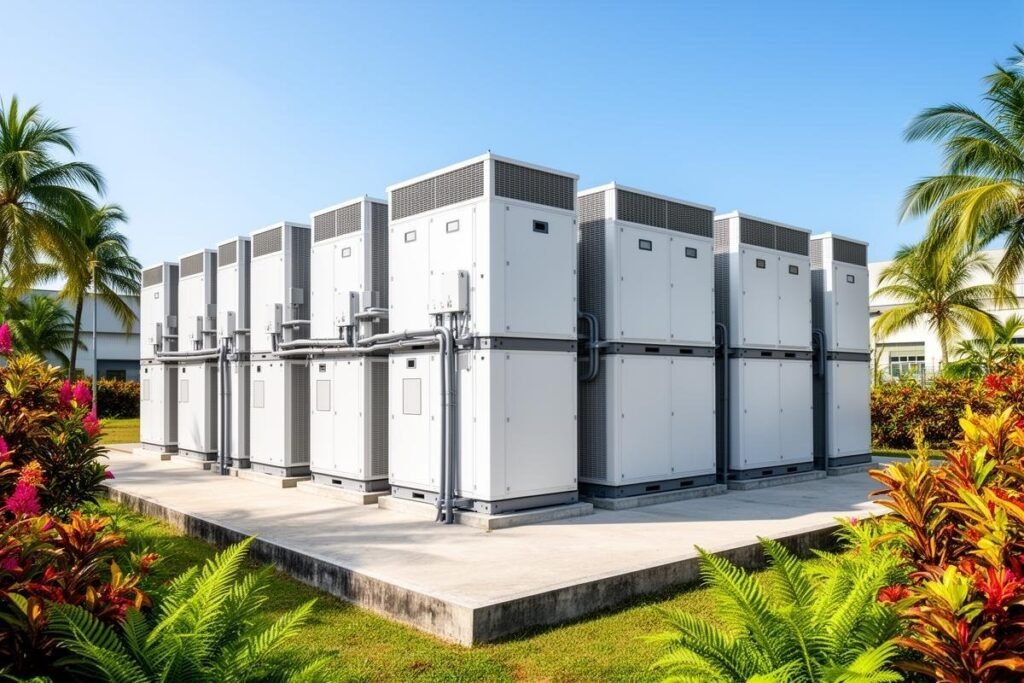
The central point of the discussion revolved around making storage systems more accessible and efficient, catering to needs ranging from residences to large industrial complexes. The flexibility and scalability of the new architectures introduced by Dyness are seen as key to overcoming current challenges and driving the sector forward.
Strategic Dialogue on Papo Solar
On Papo Solar #189, Ericka Araújo and Bruno Kikumoto hosted key figures from Dyness: Carlos Trotta, Senior Sales Business Development Manager, and Vinicius Goulart, Pre-Sales Technical Manager. The conversation delved into the evolution of energy storage technology and the diverse applications that new architectures are enabling in the Brazilian market.
Overcoming Challenges and Driving Trends
Dyness executives discussed major industry trends and the daily obstacles faced by integrators. They emphasized how the company’s flexible and scalable solutions can simplify processes such as installation, operation, and future expansion of storage systems, ensuring greater efficiency and viability for sustainable energy projects.
Versatile Portfolio and Prospects for Brazil
During the program, Dyness’s robust portfolio was detailed, showcasing solutions tailored to a wide range of needs and application profiles. The company demonstrates a clear commitment to the growth of energy storage in Brazil, outlining its prospects for a future where solar energy and other renewable sources integrate even more effectively into the national power grid.
Dyness’s innovative solutions promise a significant impact on the Brazilian energy sector by offering greater autonomy and efficiency. The focus on flexible and scalable systems not only addresses current demands but also prepares the market for exponential growth in clean energy, solidifying Brazil as a relevant player in the global sustainability agenda.